
If you're considering a debt relief program, one of the most pressing questions on your mind is likely: does debt relief hurt your credit? The short answer is yes, in most cases - but the extent of the damage, how long it lasts, and whether it's worth the trade-off depends on several factors. This guide breaks down exactly how debt relief impacts your credit score and what you can do to minimize the damage.
Does Debt Relief Hurt Your Credit? The Short Answer
Yes, debt relief hurts your credit is a question with a fairly consistent answer across most financial experts: it typically does, at least in the short term. Most debt relief strategies, especially debt settlement, involve either missed payments, reduced balances, or accounts being marked as "settled for less than owed," all of which negatively affect your credit report. For a detailed explanation of exactly how this process unfolds, this resource on how debt relief can affect your credit score walks through the mechanics in depth.
How Does Debt Relief Actually Affect Your Credit?
To understand whether debt relief hurts your credit, it helps to break down the specific ways different debt relief methods impact your credit report:
Debt Settlement
This is typically the most damaging option. Since most settlement programs require you to stop making payments to creditors while funds accumulate for negotiation, your accounts become delinquent, and each missed payment is reported to credit bureaus. Once a debt is settled, it's marked as "settled" rather than "paid in full," which can also lower your score.
Debt Consolidation
Consolidation tends to be less harmful, since you're not missing payments - you're simply combining debts into a new loan. However, applying for a new loan does involve a hard credit inquiry, which can cause a small, temporary dip.
Debt Management Plans (DMPs)
These plans, run through credit counselling agencies, generally have a milder impact since payments continue to be made, just through a restructured plan. Some lenders may note the account is enrolled in a DMP, which could have a minor effect.
Bankruptcy
This is the most severe option in terms of credit damage, with effects lasting up to 7–10 years depending on the chapter filed.
Why Does Debt Relief Hurt Your Credit in the First Place?
Several factors contribute to why debt relief hurts your credit trends toward "yes" in most scenarios:
- Missed payments – Settlement programs often require you to stop paying creditors, leading to delinquency marks
- Reduced balances – Settling for less than owed gets reported as a negative account status
- New hard inquiries – Consolidation loans require credit checks that slightly lower your score
- Account closures – Old accounts may be closed as part of settlement or consolidation, affecting your credit history length
- Increased credit utilization – If revolving accounts are closed, your utilization ratio on remaining accounts can spike
A helpful breakdown of these specific credit score triggers is available in this guide on whether debt relief affects your credit score and by how much, which outlines the mechanics behind each factor.
How Much Does Your Credit Score Drop?
The exact impact varies by individual, but here's a general idea of what to expect when exploring whether debt relief hurts your credit:
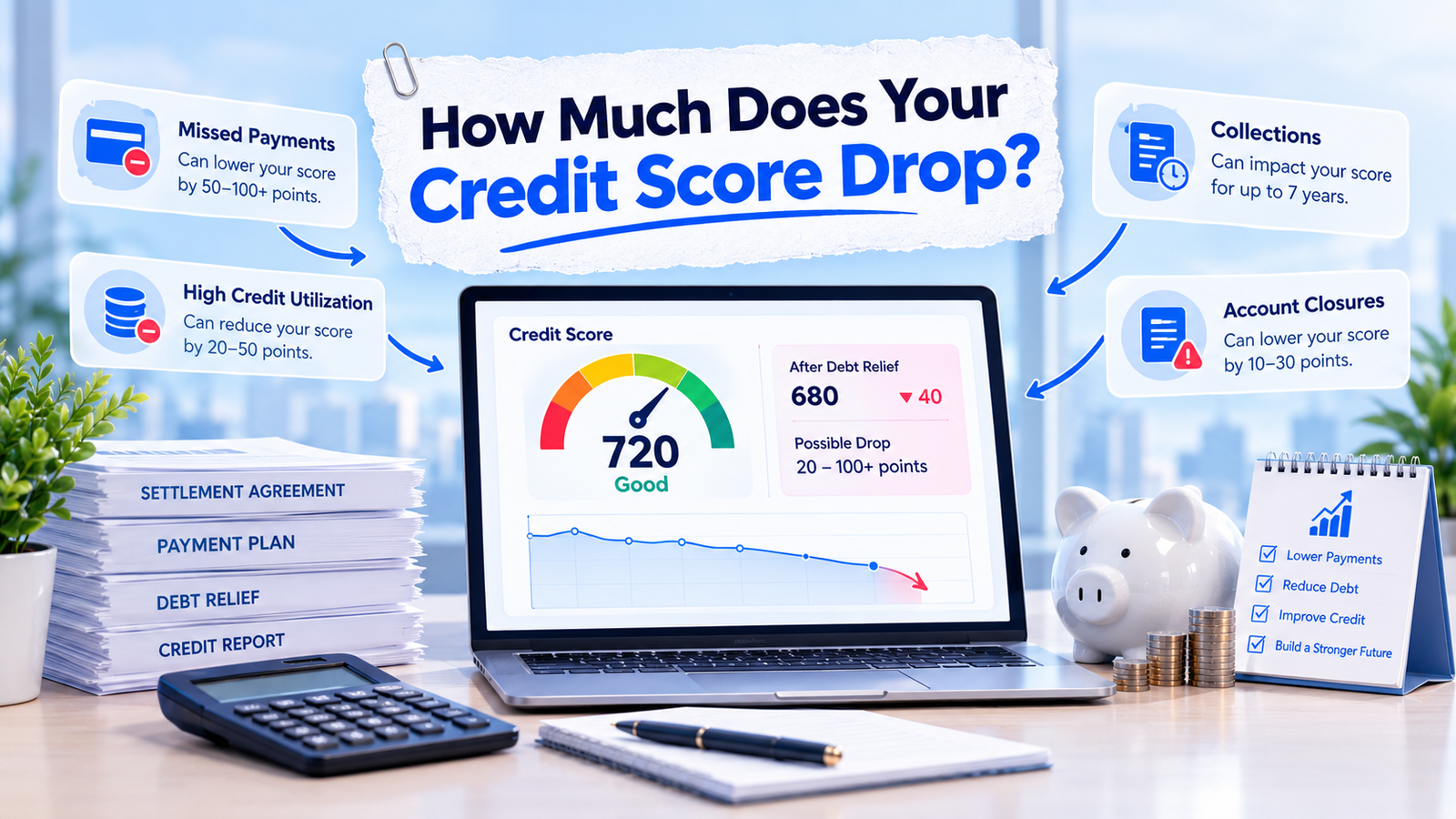
- Debt settlement: Can cause a drop of 100 points or more, especially if you had good credit beforehand
- Debt consolidation: Typically causes a minor, temporary dip of 5–10 points due to hard inquiries
- Debt management plans: Usually minimal direct impact, though missed payments before enrollment still count against you
- Bankruptcy: Can cause a drop of 130–240 points depending on your starting score
These numbers aren't universal, since credit scoring models weigh factors differently based on your overall credit history and existing score.
How Long Does the Credit Impact Last?
Another important piece of the does debt relief hurt your credit conversation is duration. Negative marks don't stay on your credit report forever, but they do linger for a while:
- Settled accounts – Typically remain on your credit report for 7 years from the date of first delinquency
- Missed payments – Also stay on your report for 7 years, though their impact lessens over time
- Bankruptcy – Chapter 7 stays for 10 years; Chapter 13 for 7 years
- Hard inquiries – Fall off after 2 years, though their impact on your score fades much sooner
Does Debt Relief Hurt Your Credit More Than Not Paying at All?
This is a nuanced part of the does debt relief hurt your credit discussion. In many cases, people entering debt relief programs are already struggling with missed payments or maxed-out credit lines. In these situations, the damage may already be occurring regardless of whether they pursue relief. Choosing a structured program can sometimes limit further damage compared to continued default, since it provides a clear timeline toward resolution rather than indefinite delinquency.
Ways to Minimize Credit Damage During Debt Relief
If you're worried about whether debt relief hurts your credit but still need help managing overwhelming debt, there are strategies to reduce the impact:
- Choose debt management plans over settlement when possible, since payments continue being made
- Keep older accounts open if feasible, to preserve credit history length
- Monitor your credit report regularly to catch and dispute any reporting errors
- Avoid applying for new credit during the debt relief process
- Communicate with creditors directly before entering a formal program, in case informal arrangements are possible
- Pay down remaining balances quickly once the program concludes to rebuild utilization ratios
Rebuilding Your Credit After Debt Relief
Once your debt relief program concludes, credit recovery is possible with consistent effort. Here's how:
- Check your credit report for accuracy and dispute any errors
- Make all future payments on time, since payment history is the biggest scoring factor
- Keep credit utilization low, ideally under 30% of available credit
- Consider a secured credit card if your score has dropped significantly, to rebuild responsibly
- Avoid closing old accounts unnecessarily, since credit history length matters
- Be patient – meaningful score recovery often takes 12–24 months of consistent positive behavior
Debt Relief Options Ranked by Credit Impact
For readers weighing their choices, here's a general ranking from least to most damaging:
- Debt Management Plan – Mildest impact, since payments continue
- Debt Consolidation – Minor, temporary dip from hard inquiries only
- Debt Settlement – Significant impact due to missed payments and settled status
- Bankruptcy – Most severe and longest-lasting impact
Understanding where each option falls on this spectrum is key to answering whether debt relief hurt your credit in a way that's relevant to your specific situation.
Is the Credit Score Trade-Off Worth It?
For many people facing overwhelming debt, the temporary credit damage from a relief program is a worthwhile trade-off for long-term financial stability. Carrying high-interest debt indefinitely can be just as damaging to your financial health as a temporary score drop, especially if missed payments and mounting interest are already eroding your credit. The key is approaching debt relief with realistic expectations about both the benefits and the credit consequences involved.
Final Thoughts
So, does debt relief hurt your credit? In most cases, yes - but the severity and duration depend heavily on which type of program you choose and how you manage the process. Debt settlement and bankruptcy tend to cause the most significant damage, while consolidation and management plans are comparatively gentler. Understanding these trade-offs allows you to make an informed decision that balances short-term credit impact against long-term financial relief. With patience and responsible credit habits after the program ends, recovery is absolutely achievable.
Frequently Asked Questions (FAQs)
1. Does debt relief hurt your credit permanently?
No, the impact is temporary. Most negative marks fall off your credit report after 7 years, and your score can begin recovering much sooner with responsible financial habits.
2. Does debt relief hurt your credit more than debt consolidation?
Generally, yes. Debt settlement tends to cause more significant credit damage than consolidation, since settlement often involves missed payments, while consolidation typically does not.
3. Can I avoid credit damage entirely with debt relief?
It's difficult to avoid all impact, but choosing options like debt management plans instead of settlement can significantly reduce the damage compared to more aggressive relief methods.
4. How long before my credit score recovers after debt relief?
Meaningful recovery often takes 12 to 24 months of consistent on-time payments and responsible credit use, though full recovery to pre-relief scores can take longer.
5. Does debt relief hurt your credit score even if I complete the program successfully?
Completing a program successfully is better than defaulting, but the negative marks from the process, like settled accounts or missed payments, remain on your report for years regardless of successful completion.
6. Is it better to just pay off debt slowly instead of pursuing relief?
If you can manage payments without missing due dates, paying debt off gradually typically causes less credit damage. Debt relief is generally better suited for those already struggling with unmanageable balances.