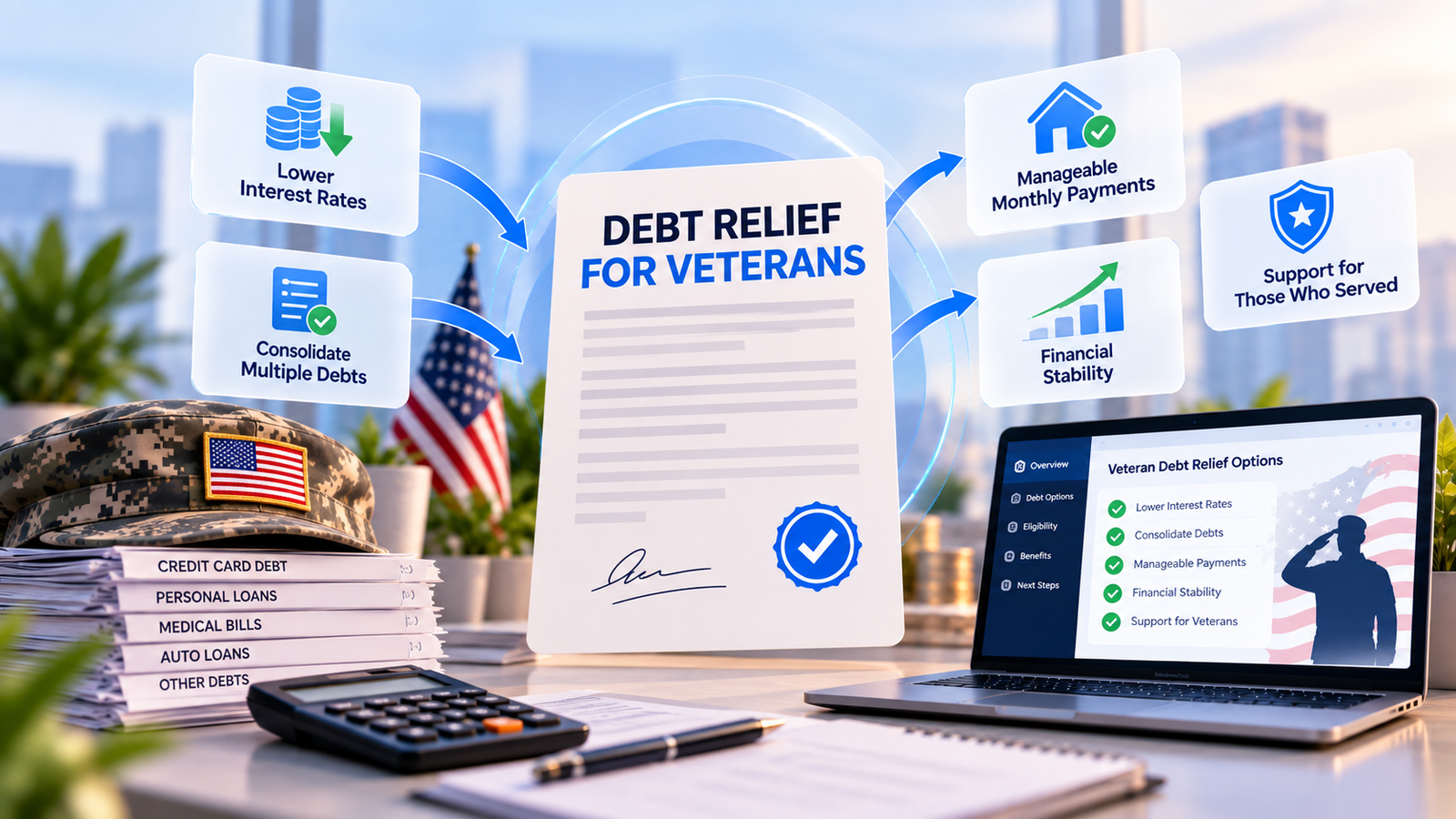
Military service builds discipline, yet money stress can still follow you home. Debt relief for veterans exists to ease that pressure. Many programs are free, and many people never use them.
Debt is also a national issue. In fact, the average American carries a significant amount of debt, and veterans face the same bills. However, they also deal with moves, medical costs, and career gaps.
This guide explains debt relief for veterans in plain language. Moreover, it covers government aid, nonprofit grants, legal protections, and private options. By the end, you will know where to start.
What Is Debt Relief for Veterans?
Debt relief for veterans means any program or strategy that lowers, pauses, or reorganizes what a veteran owes. Some options come from the government. Others come from charities, lenders, or credit counselors.
The goal is simple: help you regain control. Relief can take several forms:
- Waivers or reduced bills for certain VA debts
- Grants that pay urgent expenses
- Lower rates through consolidation
- Structured repayment through a counselor
- Negotiated reductions through settlement
Not every option fits every person. Therefore, you should match the tool to your situation.
Why Veterans Face Unique Money Challenges
Veterans carry some financial burdens that civilians rarely meet. Understanding them helps you pick the right help.
Common pressure points include:
- Gaps in income during the move from service to civilian work
- Medical bills linked to injuries or illness
- Housing costs after a relocation
- Credit damage from deployments or frequent moves
- Overpayments of VA benefits that must be repaid
In addition, some veterans take on high-interest loans during hard months. Those loans can snowball fast. As a result, early action matters.
Government Programs That Support Debt Relief for Veterans
The VA and other agencies offer several programs. Debt relief for veterans often starts here because the help costs little or nothing.
VA Financial Hardship Assistance
This program helps veterans who struggle to pay VA medical copays. If your income drops or your health costs rise, the VA may reduce, waive, or cancel some charges. You must share financial details, so gather your records first.
VA Debt Management Center
Sometimes the VA says you owe money, such as after a benefit overpayment. You do not have to accept this blindly. You can request a repayment plan, ask for a waiver, or submit a compromise offer. Contact the center quickly, because delays can lead to collection actions.
VA Disability Compensation
Veterans with service-connected conditions may receive monthly, tax-free payments. This income does not erase debt directly. Nevertheless, it can stabilize your budget and make repayment realistic. If you think you qualify, file a claim as soon as possible.
VA Pension Benefits
Wartime veterans with limited income and certain needs may qualify for a pension. Age, income, and health status all play a role. Higher payments may apply for those who need regular help or are housebound.
VA-Backed Home Loans
A VA home loan can lower housing costs through no down payment and no private mortgage insurance. Furthermore, credit rules tend to be flexible. Some veterans also refinance to cut their rate and free up monthly cash.
Nonprofit Help and Military Relief Societies
Charities fill gaps that government programs leave open. They form an important part of debt relief for veterans because they move quickly during emergencies.
Consider these groups:
- Army Emergency Relief, Navy-Marine Corps Relief Society, Air Force Aid Society, and Coast Guard Mutual Assistance: Each branch runs its own program, often with grants or no-interest loans.
- Operation Homefront: This group helps with overdue bills, repairs, and housing costs.
- VFW Unmet Needs: It offers small grants for essentials such as food, utilities, and medical costs.
- American Legion Temporary Financial Assistance: It supports veterans with minor children.
- USA Cares: It helps military families with expenses such as housing and basic needs.
Rules differ by group. Therefore, read each eligibility page before you apply. Applying to several programs also raises your chances.
Legal Protections for Service Members and Veterans
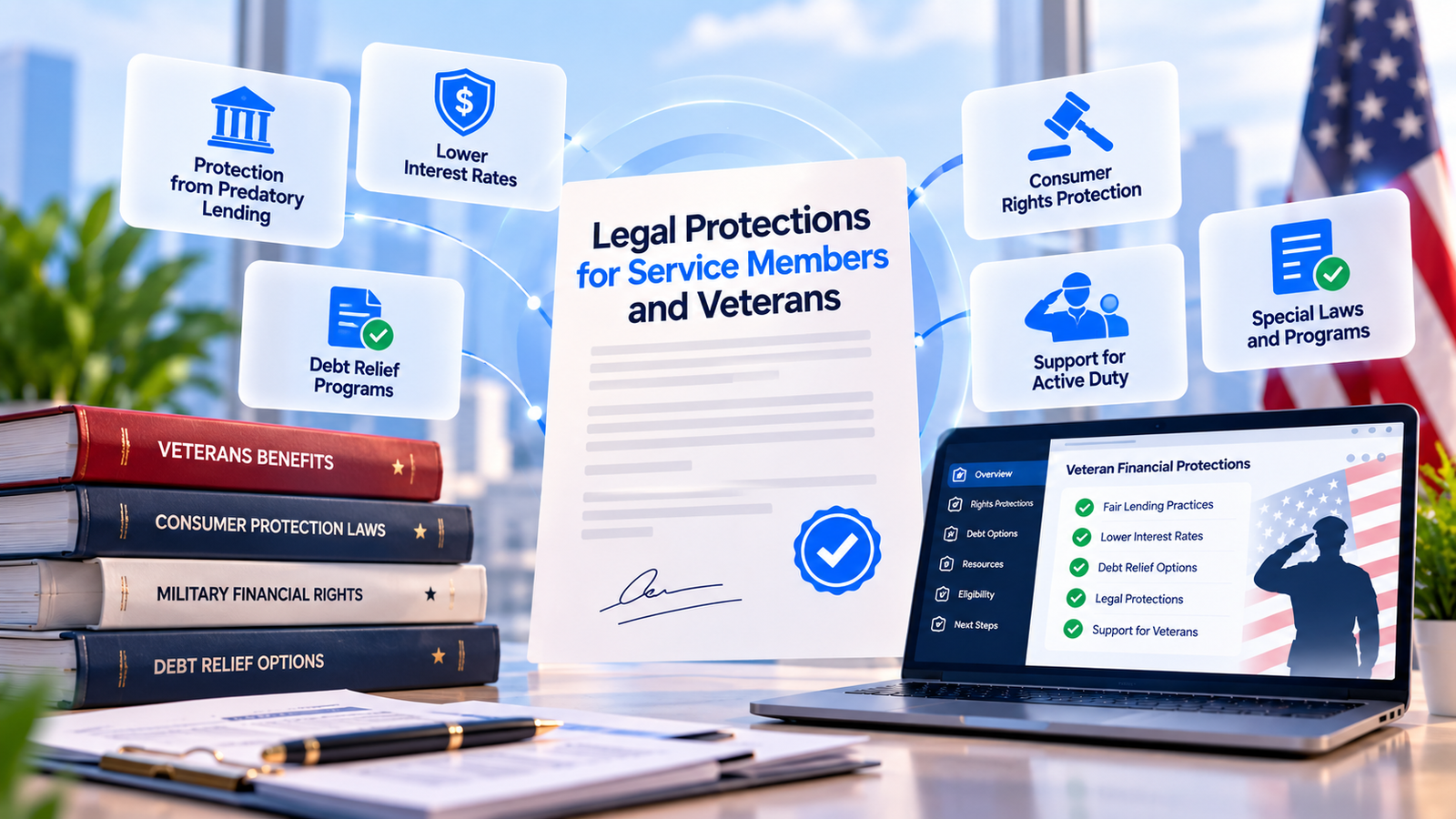
Debt relief for veterans also includes legal shields. Two federal laws deserve attention.
- Servicemembers Civil Relief Act (SCRA): It can cap interest at 6% on certain debts taken before active duty. It also offers protections on leases and some court actions.
- Military Lending Act (MLA): It limits the cost of many consumer loans for active-duty members and their dependents to a 36% military annual percentage rate.
These laws mainly protect people on active duty. However, some protections reach those who recently left service. Check your dates and contact a legal assistance office if you are unsure.
Debt Relief for Veterans: Private Options Compared
Government and charity aid may not cover everything. In that case, private solutions can help. Each one has trade-offs.
Debt Consolidation
Consolidation merges several debts into one loan with one payment. It works best when the new rate beats your current average. Credit unions that focus on military families often offer competitive terms. Still, compare the annual percentage rate (APR), because fees raise the true cost.
Credit Counseling and Debt Management Plans
A nonprofit credit counselor reviews your budget and may set up a debt management plan. The counselor negotiates lower rates with your creditors. You then make one monthly payment to the agency. This route suits veterans with steady income who want structure.
Debt Settlement
Settlement companies negotiate with creditors to reduce what you owe. It can help when balances are very high, and you have fallen behind. However, it carries risks, including credit damage and fees. To understand those effects, read how debt relief affects your credit before you sign anything.
Bankruptcy
Bankruptcy is a legal process that can discharge many debts. It also leaves a long mark on your credit. Consequently, most experts treat it as a last resort. Speak with a licensed attorney before you decide.
How to Choose the Best Debt Relief for Veterans
No single plan wins for everyone. Use these questions to guide your choice:
- How much do you owe, and to whom?
- Is your income steady, or has it dropped?
- Are your debts mostly credit cards, medical bills, or VA debts?
- Can you qualify for a lower rate?
- Do you need legal protection right now?
If your problem is a VA debt, start with the VA. If it is a short-term emergency, try a military relief group. If you carry high-interest cards, consolidation or counseling may fit. Meanwhile, settlement or bankruptcy should come later.
Steps to Start Your Debt Relief for Veterans Plan
Action beats worry. Follow this simple path:
- List every debt. Record balances, rates, due dates, and lenders.
- Track your income and spending. Find where money leaks out.
- Contact the VA first for VA debts. Ask about waivers and payment plans.
- Apply for aid. Reach out to relief societies and nonprofit programs.
- Request free counseling. A nonprofit counselor can review your options.
- Compare private solutions. Check rates, fees, and total cost.
- Build a small emergency fund. Even a few hundred dollars helps you avoid new debt.
Take one step each day. Small moves add up quickly.
Avoid Scams That Target Veterans
Scammers often target people in the military community. They know many veterans want quick answers. Be careful with debt relief offers for veterans that sound too good.
Watch for these red flags:
- Guaranteed results or "instant" forgiveness
- Demands for upfront fees before any work begins
- Requests for gift cards, wire transfers, or cryptocurrency
- Claims of a secret government program
- Pressure to sign immediately
Real programs explain their terms clearly. In addition, you can check a company's reviews and complaint history before you share personal data. When in doubt, hang up and call the agency directly.
Debt Relief for Veterans Who Own Businesses
Many veterans start companies after service. Business debt adds another layer of stress. Personal and business finances can also overlap, especially with personal guarantees.
If company debts grow out of control, review business debt settlement as one possible path. It works differently from personal relief, so learn the rules first. Additionally, consider asking the Small Business Administration about veteran-focused resources.
Money Stress and Your Wellbeing
Financial strain can weigh heavily on your mind. If stress feels overwhelming, you do not have to carry it alone. The Veterans Crisis Line is available at any hour. Dial 988 and press 1, or text 838255.
Asking for help is a strong move. It also makes financial decisions clearer.
Final Thoughts
Debt relief for veterans offers many paths, from VA programs to charity grants and private solutions. Furthermore, legal protections can shield you during service and beyond. The key is to match the right tool to your situation.
Start with free help, compare every offer, and avoid scams. Ultimately, debt relief for veterans works best when you act early and stay consistent.
Frequently Asked Questions
1. What is debt relief for veterans?
Debt relief for veterans refers to programs and strategies that reduce, pause, or restructure what a veteran owes. It includes VA waivers, charity grants, consolidation, counseling, and settlement.
2. Does the VA offer debt relief for veterans?
Yes, in some cases. The VA can waive or reduce certain copays and benefit overpayments. It also offers repayment plans. Contact the VA early to learn your options.
3. Is debt relief for veterans free?
Many programs cost nothing, including VA hardship help and nonprofit counseling. Private options, such as settlement, may charge fees. Always ask for costs in writing.
4. Can veterans get a grant to pay off credit cards?
Grants rarely pay credit card balances directly. They usually cover urgent needs like rent, utilities, or food. That support can free up money for your debt payments.
5. Will debt relief hurt my credit score?
It depends on the method. Hardship waivers and grants usually do not affect your score. Settlement and bankruptcy can lower it. Consolidation may help if you pay on time.
6. What should I do first if I am overwhelmed by debt?
List your debts, then talk to a nonprofit credit counselor. If you owe the VA, contact them right away. Early action keeps more options open.