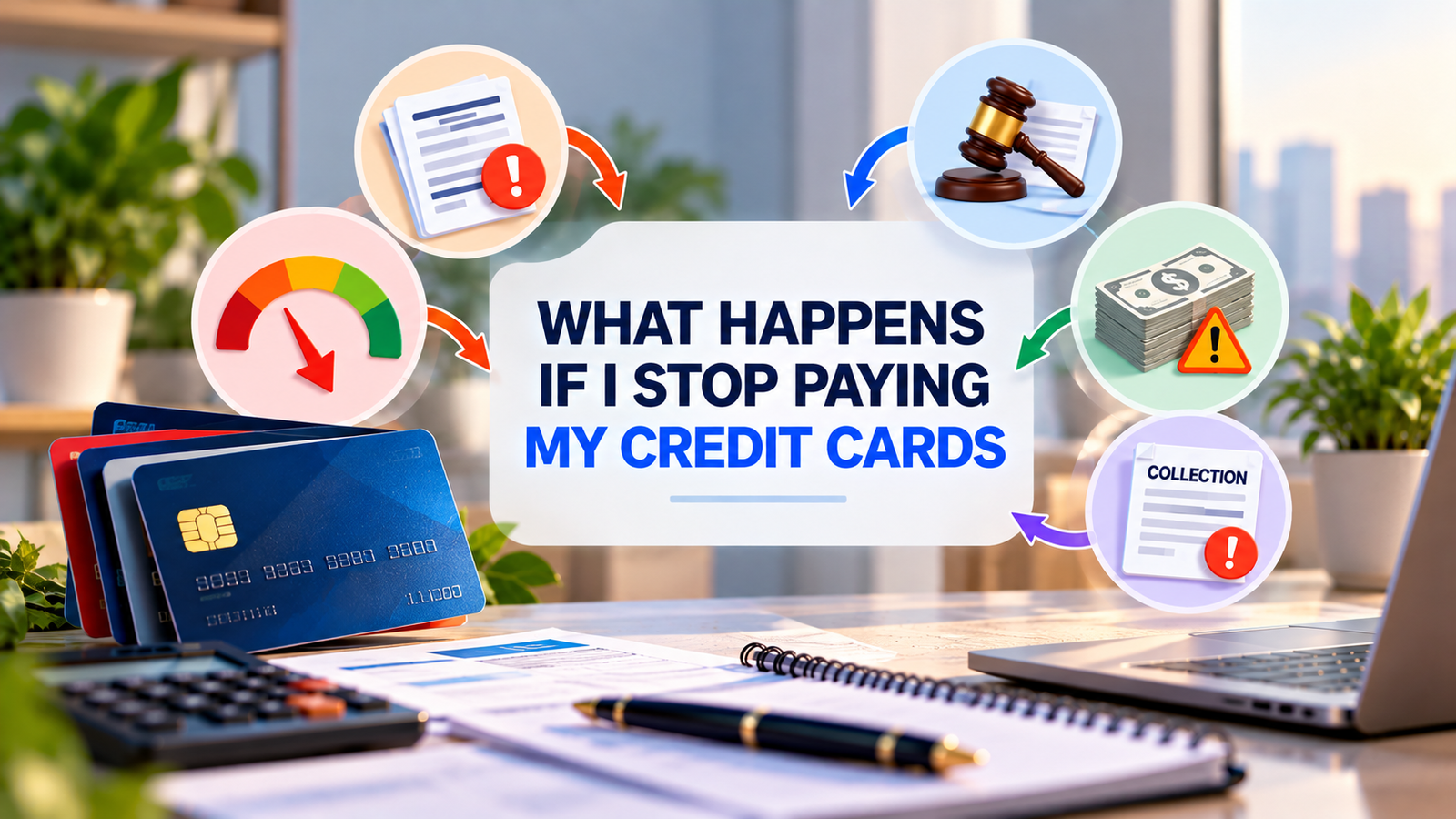
Falling behind on credit card bills is stressful. Many people ask, “What happens if I stop paying my credit cards?” The short answer is that your balance grows, your credit score drops, and creditors escalate their collection efforts.
However, these consequences arrive in stages. Knowing each stage helps you act before the damage deepens. This guide explains what happens if I stop paying my credit cards, month by month, and shows you realistic ways to recover.
You are not alone. Check how much debt the average American has, and you will see that millions of households struggle with the same problem.
What Happens If I Stop Paying My Credit Cards: The Timeline
Credit card trouble does not hit all at once. Instead, it builds over several months. Here is the typical path.
Days 1–29: The early warning stage
- Your issuer charges a late fee.
- You receive reminder emails, texts, and calls.
- Your credit report stays unchanged for now.
Days 30–59: The first credit damage
- The issuer reports your account as 30 days late.
- Your credit score can fall by dozens of points.
- Your account may be frozen or closed to new purchases.
Days 60–119: Penalties pile up
- Your issuer may apply a penalty interest rate, which can exceed 29%.
- Collection calls become more frequent.
- Your late payment history grows longer.
Days 120–180: The charge-off
- The issuer writes off the debt as a loss.
- The account shows as “charged off” on your credit report.
- The issuer may sell your debt to a collection agency.
Importantly, a charge-off does not erase what you owe. You still owe the full balance, plus any fees and interest.
Late Fees and Higher Interest Rates
Your first penalty is usually a late fee. Issuers can charge it each month you miss a payment. Moreover, a penalty APR makes your balance grow faster.
Consider this example. Suppose you owe $5,000 at a 29% penalty rate. You would add roughly $120 in interest every month. Add late fees, and the balance climbs even if you never swipe the card again.
Therefore, the longer you wait, the more expensive the debt becomes.
How Missed Payments Damage Your Credit Score
Payment history carries the most weight in your credit score. As a result, even one missed payment can hurt. Several missed payments can cause severe damage.
Here is what you can expect:
- A single 30-day late payment can drop a good score significantly.
- Higher scores often fall further than lower ones.
- Charge-offs and collections stay on your report for seven years.
- Lower scores lead to higher rates on loans, car insurance, and apartment applications.
Many people also worry that seeking help will make things worse. That concern is understandable, so it helps to learn whether debt relief hurts your credit before deciding. In most cases, the damage from ignoring debt is far greater than the damage from solving it.
Collection Calls, Letters, and Third-Party Agencies
Once your account goes to collections, the tone changes. Collectors may call, text, and send letters. In addition, they may report the debt separately on your credit file.
Federal law protects you, however. Under the Fair Debt Collection Practices Act, collectors must follow strict rules. They cannot:
- Call before 8 a.m. or after 9 p.m.
- Threaten violence or arrest.
- Lie about the amount you owe.
- Discuss your debt with most third parties.
You also have the right to request written validation of the debt. Send this request within 30 days of the first contact. Meanwhile, keep records of every call and letter.
Can Credit Card Companies Sue You?
Yes, they can. If you ignore your debt long enough, the issuer or a debt buyer may file a lawsuit. This step is more likely when the balance is large.
If you lose the case, the court issues a judgment against you. Depending on your state, the creditor may then:
- Garnish a portion of your wages.
- Levy your bank account.
- Place a lien on your property.
Never ignore a court summons. If you fail to respond, the court may enter a default judgment automatically. In contrast, showing up gives you a chance to negotiate or challenge the claim.
Note that some income is protected from garnishment. Social Security benefits, for example, usually have strong protection. Still, rules vary by state, so consult a local attorney or legal aid office.
Does the Statute of Limitations Wipe Out the Debt?
Every state sets a time limit for suing over unpaid debt. This period typically ranges from three to ten years. After it expires, a collector generally cannot win a lawsuit over that debt.
However, be careful. In some states, a small partial payment or written acknowledgement can restart the clock. Therefore, speak with a professional before you send money on an old account.
Also remember that an expired statute of limitations does not erase the negative mark. The item still follows its own seven-year credit reporting timeline.
Is It Ever Smart to Stop Paying Your Credit Cards?
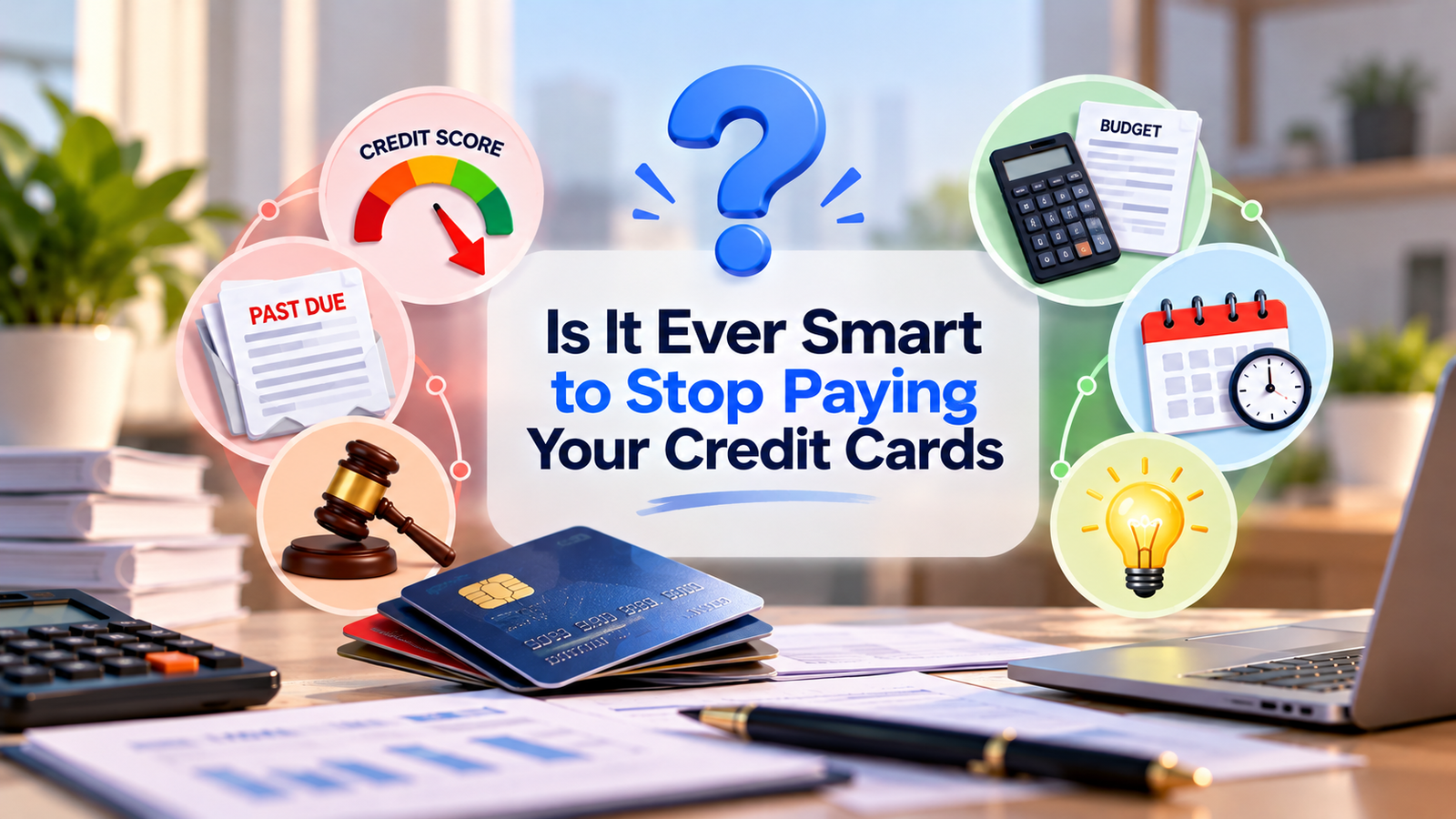
Most experts say no. Walking away rarely solves the underlying problem. Instead, it adds fees, interest, and legal risk.
Some people stop paying on purpose because they plan to settle later. This strategy is risky. Creditors do not have to negotiate, and they may sue first. Moreover, your credit takes a serious hit during the process.
Before you stop paying, you should first understand how debt relief programs work. A structured program gives you a plan, while silence gives you only consequences.
What to Do Instead of Ignoring Your Credit Card Bills
If you cannot afford your payments, take action early. Even small steps can protect you. Try this approach:
- Call your issuer. Ask about hardship programs, lower rates, or temporary payment reductions.
- Build a bare-bones budget. List essential expenses first, then decide what remains for debt.
- Pause new spending. Stop using the cards so the balance stops growing.
- Prioritize essentials. Housing, utilities, food, and transportation come before unsecured debt.
- Seek free guidance. Nonprofit credit counsellors can review your situation at no cost or low cost.
Furthermore, you can learn how to lower credit card debt with proven tactics such as the avalanche and snowball methods. Little, steady progress adds up quickly.
Debt Solutions That Can Help
If budgeting alone is not enough, several options can reduce the pressure. Each has benefits and tradeoffs.
Debt consolidation
This option combines multiple balances into one payment. Ideally, you secure a lower rate. Explore low-interest debt consolidation options if your credit is still in decent shape. Additionally, weigh the debt consolidation pros and cons before you apply.
Debt settlement
A settlement company negotiates with creditors to reduce what you owe. Typically, this works best when you have fallen behind already. To understand your possibilities, read about how to get credit card debt forgiven. Be aware that forgiven debt may count as taxable income.
Debt management plan
A nonprofit agency negotiates lower interest rates with your creditors. You then make one monthly payment to the agency. Plans usually last three to five years.
Bankruptcy
Bankruptcy is a last resort. It can eliminate or restructure debt, but it stays on your credit report for years. Speak with a bankruptcy attorney before you decide.
Many people also confuse two common paths. If you feel unsure, compare debt consolidation vs. debt relief to see which fits your finances.
Are There Grants to Help With Credit Card Debt?
Government grants rarely pay credit card debt directly. Nevertheless, assistance exists in other forms. Local charities, community action agencies, and nonprofit programs can cover essentials such as rent or utilities. That frees up cash for your credit card payments.
To see what may be available, browse these grants to pay off debt and similar resources. Always verify that a program is legitimate. Avoid anyone who charges upfront fees for “guaranteed” grants.
Warning Signs of Debt Relief Scams
Desperate borrowers attract scammers. Therefore, stay alert. Walk away if a company:
- Demands large upfront fees before doing any work.
- Guarantees it will erase your debt.
- Tells you to stop talking to creditors entirely.
- Refuses to explain its process in writing.
Reputable companies explain risks clearly. They also comply with Federal Trade Commission rules on fees.
Final Thoughts
So, what happens if I stop paying my credit cards? You face late fees, penalty interest, credit score damage, collection activity, and possibly a lawsuit. The consequences grow with time, which makes early action essential.
The good news is that you have options. Contact your issuer, build a budget, and explore proven solutions. Whatever you choose, do not stay silent. A clear plan today protects your finances tomorrow.