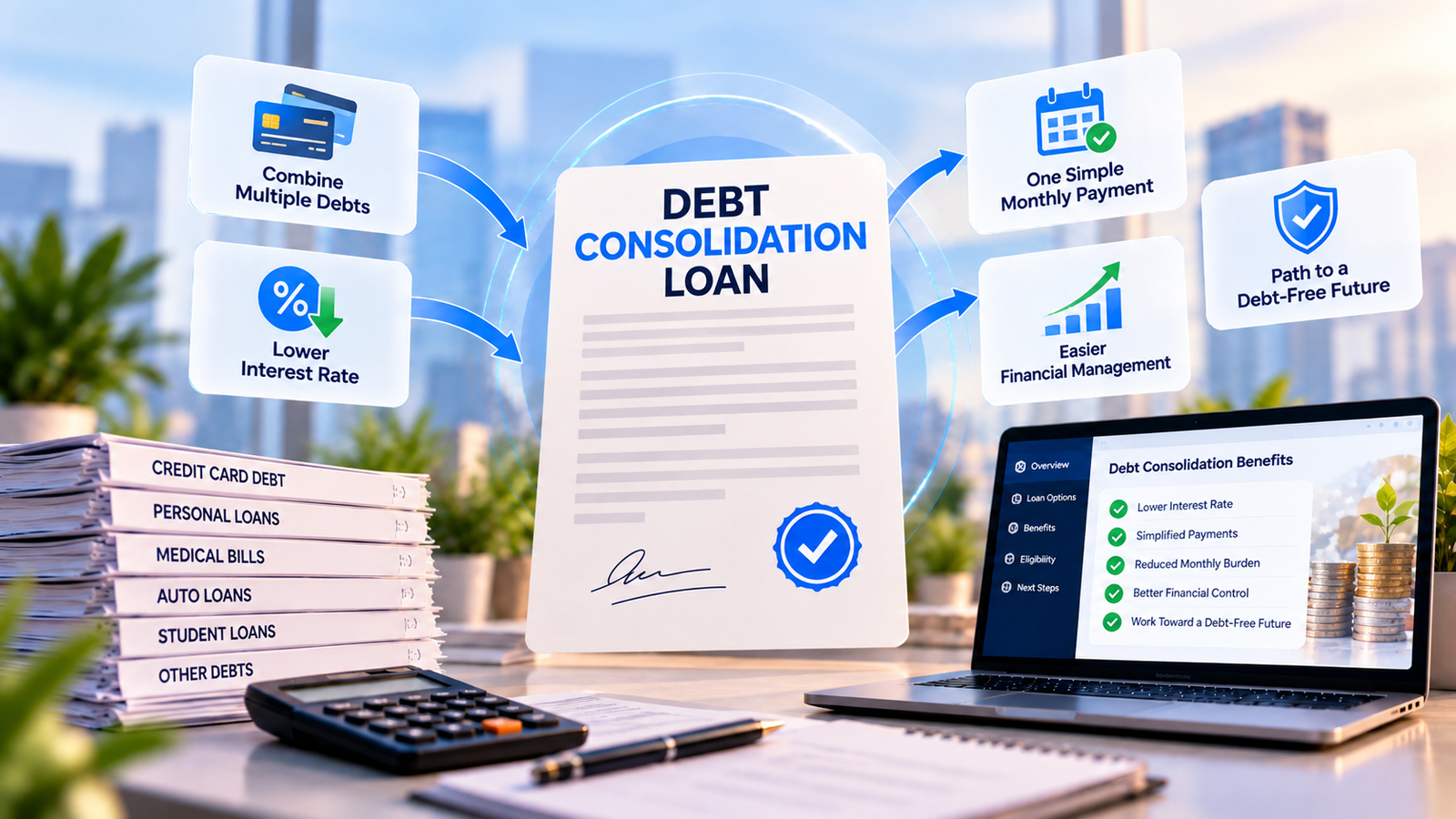
Juggling several bills every month wears you down. Different due dates, different rates, and different minimums make it easy to slip. A debt consolidation loan can simplify things by combining those balances into one payment.
However, it is not the right fix for everyone. This guide explains how a debt consolidation loan works, what it costs, and which alternatives exist.
You are in good company. Look at how much debt the average American has, and you will see why so many households look for a simpler way to repay.
What Is a Debt Consolidation Loan?
A debt consolidation loan is a personal loan that pays off your existing debts. You then repay the new loan in fixed monthly instalments. Most lenders offer terms from two to seven years.
Borrowers typically consolidate:
- Credit card balances
- Medical bills
- Store cards
- Payday or short-term loans
- Other personal loans
The goal is simple: one payment, one rate, and one due date. Ideally, that rate is lower than what you pay now.
How Does a Debt Consolidation Loan Work?
The process is straightforward. Here is the usual path:
- Check your credit. Review your score and report before you apply.
- Total your debts. Add up every balance you want to pay off.
- Compare lenders. Banks, credit unions, and online lenders all offer these loans.
- Prequalify. Most lenders show estimated rates with a soft credit check.
- Submit an application. The lender then runs a hard credit inquiry.
- Receive the funds. Some lenders pay your creditors directly. Others deposit the money into your account.
- Repay the new loan. Make your fixed payment each month until the balance reaches zero.
Importantly, use the money only to pay off existing balances. A debt consolidation loan helps only if you actually clear the old accounts.
Types of Debt Consolidation Loans
Not all consolidation loans work the same way. Each type carries different risks.
Unsecured personal loans
These loans need no collateral. Approval depends on your credit score, income, and existing debt. Rates typically range from about 6% to 36%.
Secured loans
These loans use an asset, such as your home or car, as collateral. They often carry lower rates. However, you risk losing the asset if you stop paying.
Balance transfer credit cards
Technically, this is not a loan. Still, it serves a similar purpose. Many cards offer a promotional 0% rate for a limited time. Transfer fees and post-promo rates can erase the savings, though.
Retirement account loans
Some plans let you borrow from your 401(k). Most experts advise against it. You could lose investment growth and face taxes if you leave your job.
Benefits of a Debt Consolidation Loan
A debt consolidation loan offers several clear advantages:
- Simpler budgeting. You track one payment instead of many.
- Potentially lower interest. Credit card rates often exceed 20%, so a lower loan rate saves money.
- Fixed payoff date. You know exactly when you will be debt-free.
- Predictable payments. Fixed rates prevent surprise increases.
- Possible credit improvement. On-time payments build a stronger history.
Moreover, borrowers with solid credit may qualify for low-interest debt consolidation offers that cut total costs significantly. Shop around, because rates vary widely between lenders.
Risks and Drawbacks to Consider
Consolidation has downsides, too. Understanding them protects you from costly surprises.
- Origination fees. Many lenders charge 1% to 10% of the loan amount.
- Higher rates for lower scores. Poor credit may produce a rate no better than your current one.
- Longer terms. A lower payment spread over more years can increase total interest.
- Temptation to spend again. Cleared credit cards invite new charges.
- Collateral risk. Secured loans put your property on the line.
Therefore, run the numbers before you commit. For a deeper breakdown, review the debt consolidation pros and cons. A debt consolidation loan also cannot fix overspending. Only a change in habits can do that.
How a Debt Consolidation Loan Affects Your Credit Score
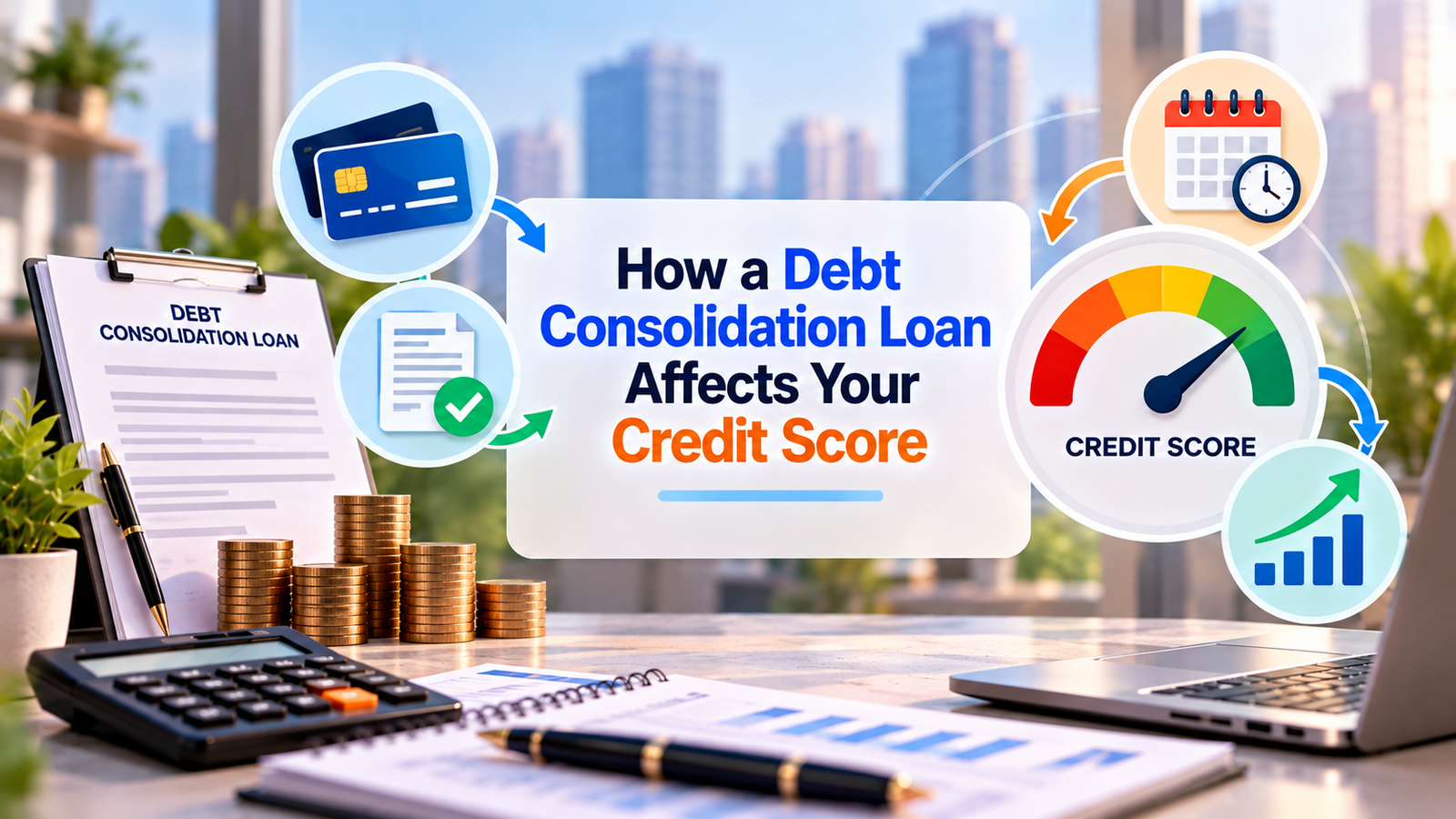
Your score may move in both directions. First, the lender’s hard inquiry can cause a small, temporary dip. Second, a new account lowers the average age of your credit history.
On the positive side, paying off credit cards reduces your credit utilization. That ratio carries significant weight in your score. In addition, on-time loan payments strengthen your payment history over time.
Be careful with old cards after you pay them off. Closing them can shrink your available credit and hurt utilization. Keep them open if they carry no annual fee, and avoid using them.
Some borrowers worry about more drastic steps. If you wonder whether debt relief hurt your credit, the answer depends on the method you choose. Compare the effects before you decide.
Who Should Consider a Debt Consolidation Loan?
A debt consolidation loan works best in specific situations. You may be a strong candidate if you:
- Have a good or fair credit score
- Carry mostly high-interest unsecured debt
- Earn steady income
- Can qualify for a rate lower than your current average
- Feel ready to stop using credit cards
In contrast, it may not suit you if your debt is small enough to pay off within a few months. It also fails if your budget cannot support any payment. In that case, another solution may serve you better.
Debt Consolidation Loan vs. Other Debt Solutions
Consolidation is only one path. Several alternatives address different problems.
Debt relief
Relief programs negotiate with creditors to reduce what you owe. They suit people who are already behind. To compare the two approaches side by side, read debt consolidation vs. debt relief. You can also learn how debt relief programs work before you decide.
Debt forgiveness and settlement
Creditors sometimes accept less than the full balance. This outcome is never guaranteed. Still, you can explore how to get credit card debt forgiven to understand the realistic options and tax effects.
Debt management plans
A nonprofit credit counseling agency negotiates lower rates with your creditors. You make one monthly payment to the agency.
Grants and assistance
Grants rarely pay off debt directly. Nevertheless, local aid can cover housing or utility costs and free up cash. Browse these grants to pay off debt to see what may be available.
Do-it-yourself payoff
If you prefer to stay in control, try the snowball or avalanche method. Our guide on how to lower credit card debt walks through both strategies.
How to Choose the Right Debt Consolidation Loan
Not every lender deserves your business. Compare offers carefully with this checklist:
- APR, not just the interest rate. The APR includes fees and shows the true cost.
- Origination fees. Lower fees mean more money reaches your creditors.
- Loan term. Pick the shortest term you can comfortably afford.
- Prepayment penalties. Avoid any lender that charges you for paying early.
- Direct creditor payment. This feature reduces the temptation to misuse the funds.
- Reputation. Read reviews and verify the lender’s licensing.
Furthermore, prequalify with several lenders. Soft inquiries let you compare rates without hurting your credit. Credit unions often beat banks on price, so include them in your search.
Common Mistakes to Avoid
Even a good debt consolidation loan can fail if you make avoidable errors. Watch out for these:
- Running up new balances on the cleared cards
- Choosing the lowest payment instead of the lowest total cost
- Ignoring fees buried in the fine print
- Borrowing more than you need
- Missing payments on the new loan
Above all, build a budget before you apply. A plan keeps you on track long after the loan closes.
Final Thoughts
A debt consolidation loan can turn scattered bills into a single, manageable payment. It works best for borrowers with decent credit, steady income, and a firm commitment to stop adding debt. For others, relief programs or credit counselling may be a better fit.
Compare lenders, calculate total costs, and read the terms carefully. With the right plan, a debt consolidation loan can be a stepping stone to financial freedom.
Frequently Asked Questions
What credit score do I need for a debt consolidation loan?
Most lenders prefer a score of 670 or higher for the best rates. Some lenders approve lower scores, but they charge higher interest. Prequalifying shows your likely offer without a hard credit check.
Does a debt consolidation loan hurt my credit?
It can cause a small, short-term dip from the hard inquiry and the new account. Over time, on-time payments and lower credit utilization often improve your score.
Can I get a debt consolidation loan with bad credit?
Yes, but options narrow, and rates rise. A co-signer or a secured loan may help. Alternatively, a debt management plan or relief program might suit you better.
Is a debt consolidation loan better than a balance transfer card?
It depends. Balance transfer cards offer 0% promotional rates but require strong credit and quick payoff. A loan provides fixed payments and a longer timeline, which suits larger balances.
What debts can I include in a debt consolidation loan?
You can usually include credit cards, medical bills, personal loans, and payday loans. Most lenders do not allow mortgages or student loans in a standard consolidation loan.