Several bills, several due dates, and several interest rates can drain your energy. One missed payment can trigger fees and hurt your credit. Many borrowers wonder whether combining everything into one payment would help.
This guide covers the debt consolidation pros and cons in plain language. You will learn how consolidation works, where it helps, where it hurts, and who should consider it.
At DebtCares, we help people understand their debt relief options. Our guides turn complex money topics into clear, practical steps. We want you to make confident decisions about your finances.
What Is Debt Consolidation?
Debt consolidation combines several debts into one new loan or account. You use the new funds to pay off your old balances. Then you make a single monthly payment.
You still owe the full amount. However, the new loan may offer a lower rate or a simpler schedule.
Many households carry multiple balances. The average American debt figures show why so many people explore consolidation.
Common Ways to Consolidate Debt
You can consolidate in several ways. Each method has its own rules and costs.
- Personal loan: A lender gives you a lump sum with a fixed rate and term.
- Balance transfer card: A card with a 0% introductory rate lets you move balances over.
- Home equity loan or HELOC: These use your home as collateral.
- Debt management plan: A nonprofit counsellor negotiates lower rates and collects one payment.
Each option changes the debt consolidation pros and cons in its own way. Therefore, match the method to your credit, income, and risk tolerance.
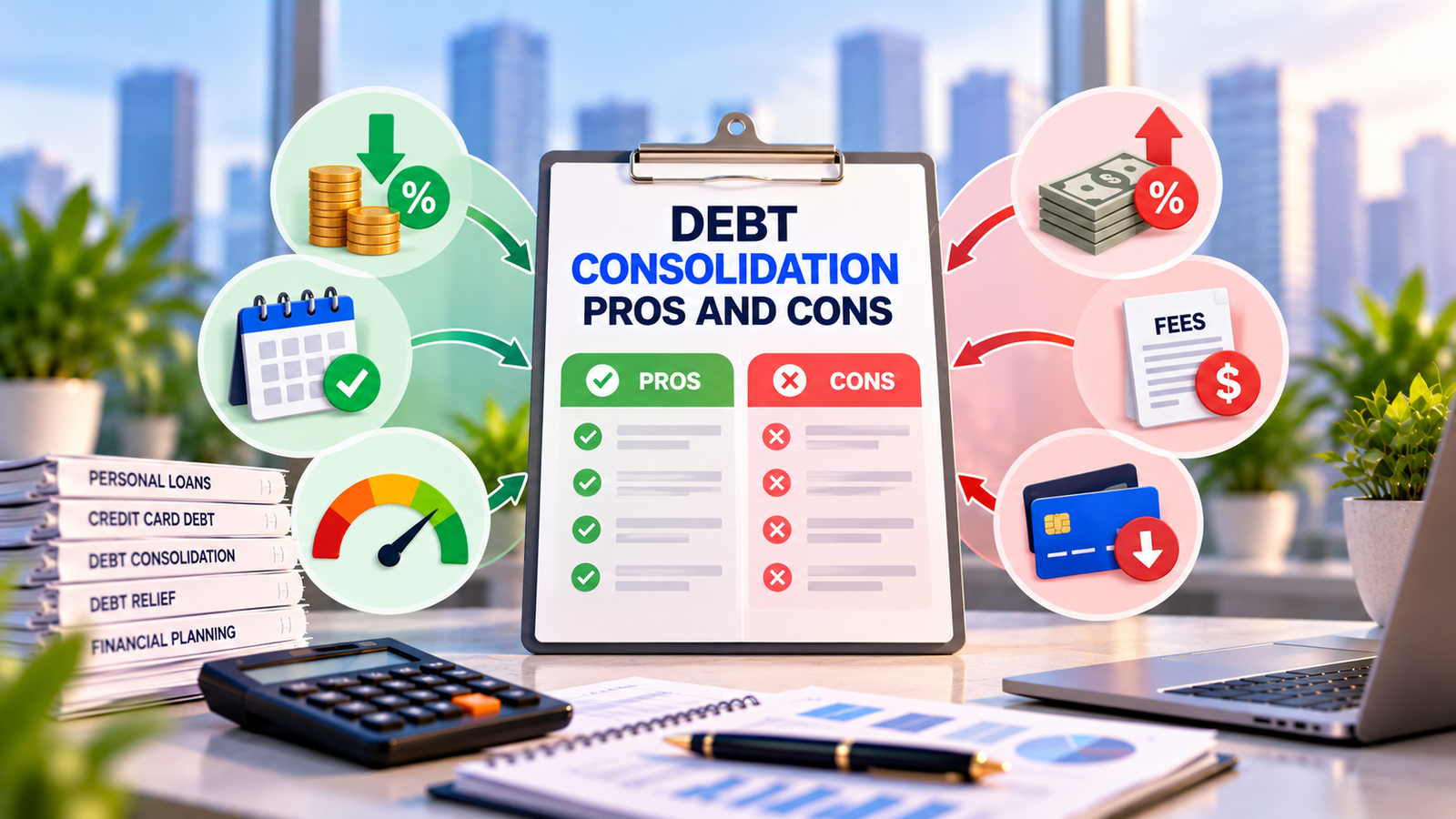
Debt Consolidation Pros and Cons at a Glance
Pros
- One monthly payment
- Possible lower interest rate
- Fixed payoff date
- Potential credit score boost
- Less stress
Cons
- Fees may apply
- Good credit needed for the best rates
- Longer terms can raise total cost
- Does not fix spending habits
- Some methods put assets at risk
The sections below explain each point in detail.
The Pros of Debt Consolidation
1. One Simple Payment
You track one due date instead of many. As a result, you lower the chance of a missed payment. Autopay makes this even easier.
2. A Potentially Lower Interest Rate
Credit cards often charge high interest. If you qualify for a lower rate, more of each payment reduces your balance. Borrowers with strong credit may find low-interest debt consolidation options that cut their total cost.
3. A Clear Payoff Timeline
Minimum payments on cards can keep you in debt for years. In contrast, most consolidation loans have fixed terms. You know exactly when you will finish.
4. A Possible Credit Score Boost
Paying off credit cards lowers your credit utilization, which can raise your score. Additionally, on-time payments build a positive history. Still, results depend on your habits.
5. Lower Stress
Fewer bills mean fewer worries. Many borrowers say a single payment makes budgeting feel manageable again.
The Cons of Debt Consolidation
1. Fees Can Add Up
Many lenders charge origination fees, often 1% to 8% of the loan amount. Balance transfer cards may charge a transfer fee as well. Always calculate whether the savings outweigh the costs.
2. You May Not Get a Lower Rate
Borrowers with fair or poor credit may receive rates similar to, or higher than, their current cards. Consequently, consolidation could cost more instead of less.
3. A Longer Term Can Cost More
A lower monthly payment can feel like a win. However, stretching the term may increase the total interest you pay. Compare the full cost, not just the monthly amount.
4. It Does Not Fix Spending Habits
Consolidation moves debt around. It does not remove the cause. If you run up your cleared cards again, you will owe even more.
5. Some Methods Put Assets at Risk
Home equity loans use your house as collateral. If you cannot pay, you could lose your home. Think carefully before you secure unsecured debt with property.
6. A Small, Temporary Credit Dip
Applying triggers a hard inquiry, which can lower your score slightly. Closing old accounts may also reduce your available credit. Most of these effects fade with time.
How Debt Consolidation Affects Your Credit
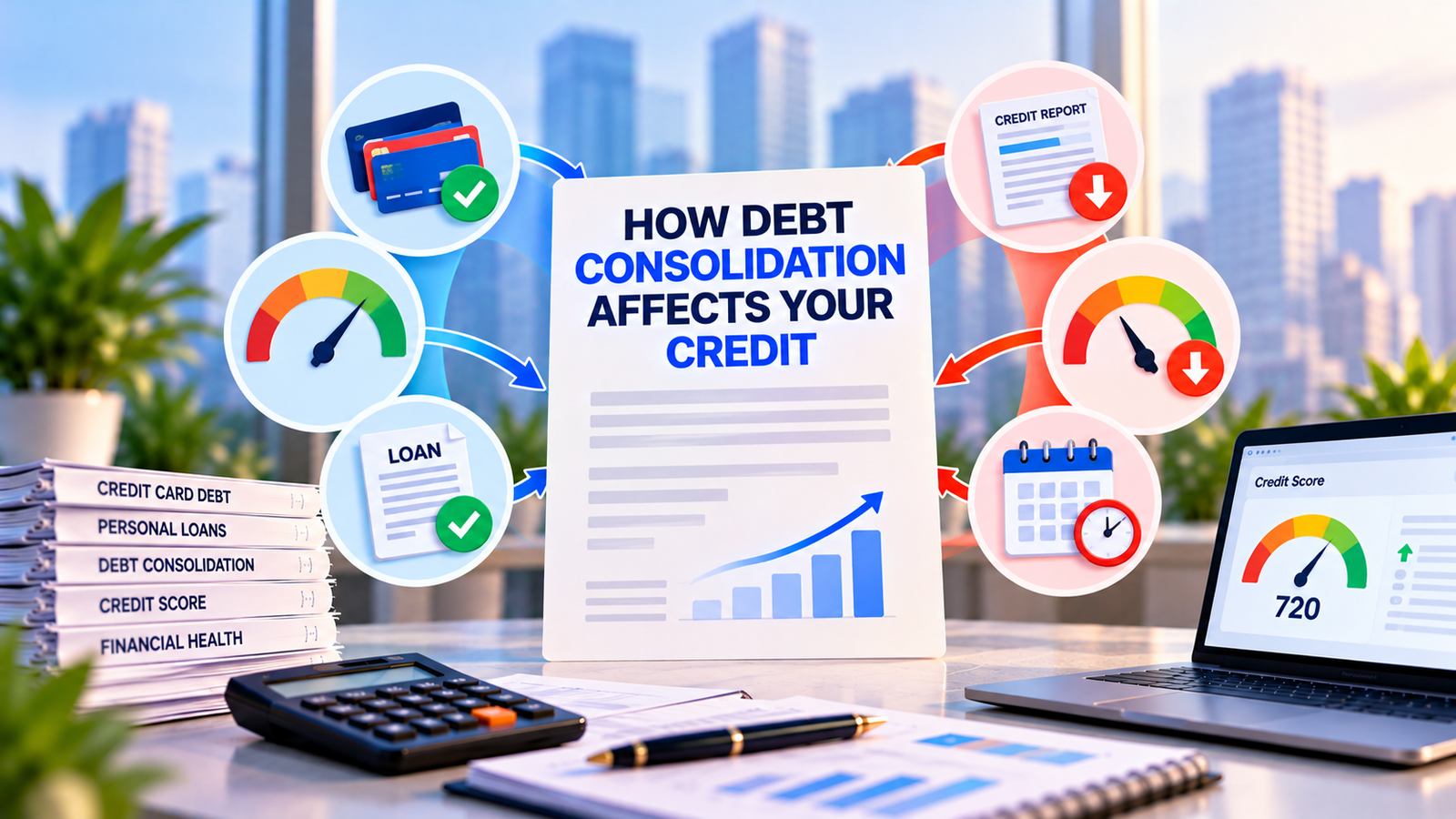
Your credit score may move in two directions. First, the hard inquiry can cause a small drop. Second, lower utilization often helps your score over time.
Payment history matters most. Therefore, one late payment can undo your progress. Many people also worry that any debt solution damages credit. To compare methods, read whether debt relief hurts your credit and how long the effects last.
Who Should Consider Debt Consolidation?
Weighing the debt consolidation pros and cons helps you spot a good fit. Consolidation tends to work for borrowers who:
- Have steady income
- Hold a fair to good credit score
- Owe mostly high-interest unsecured debt
- Can afford the new monthly payment
- Feel ready to stop using credit cards
If this list matches your situation, start comparing lenders.
Who Should Avoid Debt Consolidation?
Consolidation may not help if:
- Your debt is overwhelming compared with your income
- You are already far behind on payments
- Your credit score is too low for a better rate
- You expect to keep spending on credit
In those cases, a stronger solution may be necessary. Learning how debt relief programs work can show you what else is available.
Alternatives to Debt Consolidation
Consolidation does not suit everyone. Consider these options as well:
- Debt settlement: A company negotiates a smaller payoff, but your credit may suffer.
- Credit counselling: A nonprofit agency reviews your budget and offers guidance.
- Debt snowball or avalanche: You pay off balances by size or by interest rate.
- Grants and assistance: Some people qualify for grants to pay off debt, which they never repay.
Specific groups may find tailored help. For example, senior debt relief programs support older adults on fixed incomes. Likewise, debt relief for veterans offers benefits built for those who served.
Business owners face a different situation. If company debt is the issue, explore business debt settlement instead of personal options.
Tips to Make Consolidation Work
Getting the loan is only half the job. Use these habits to succeed:
- Compare several lenders and use prequalification
- Review the APR, fees, and prepayment penalties
- Stop using the cards you just paid off
- Build a monthly budget and follow it
- Start a small emergency fund
- Pay extra when you can
Final Thoughts
The debt consolidation pros and cons come down to your credit, your budget, and your habits. Consolidation can simplify payments and cut interest. However, it works only when you compare costs carefully and stop adding new debt.
Start by listing your debts and checking your credit. Then compare offers from several lenders. With a clear plan, you can move toward a debt-free future.
Frequently Asked Questions
What are the main debt consolidation pros and cons?
The main pros are one payment, a possible lower rate, and a clear payoff date. The main cons are fees, a possible longer term, and the risk of repeating old spending habits.
Is debt consolidation a good idea?
It can be, if you qualify for a lower rate and avoid new debt. However, it is a poor fit when fees outweigh savings or when your budget cannot support the payment.
Does debt consolidation hurt your credit?
You may see a small dip from the hard inquiry. Over time, on-time payments and lower utilization often improve your score.
What credit score do you need for debt consolidation?
Many lenders prefer a score of 670 or higher for the best rates. Some approve lower scores but charge more. Prequalification shows your likely options without hurting your credit.
Can I consolidate debt with bad credit?
Yes, but options are limited and costly. A co-signer, a secured loan, or a credit union loan may help. Alternatively, a nonprofit credit counsellor can review other solutions.