
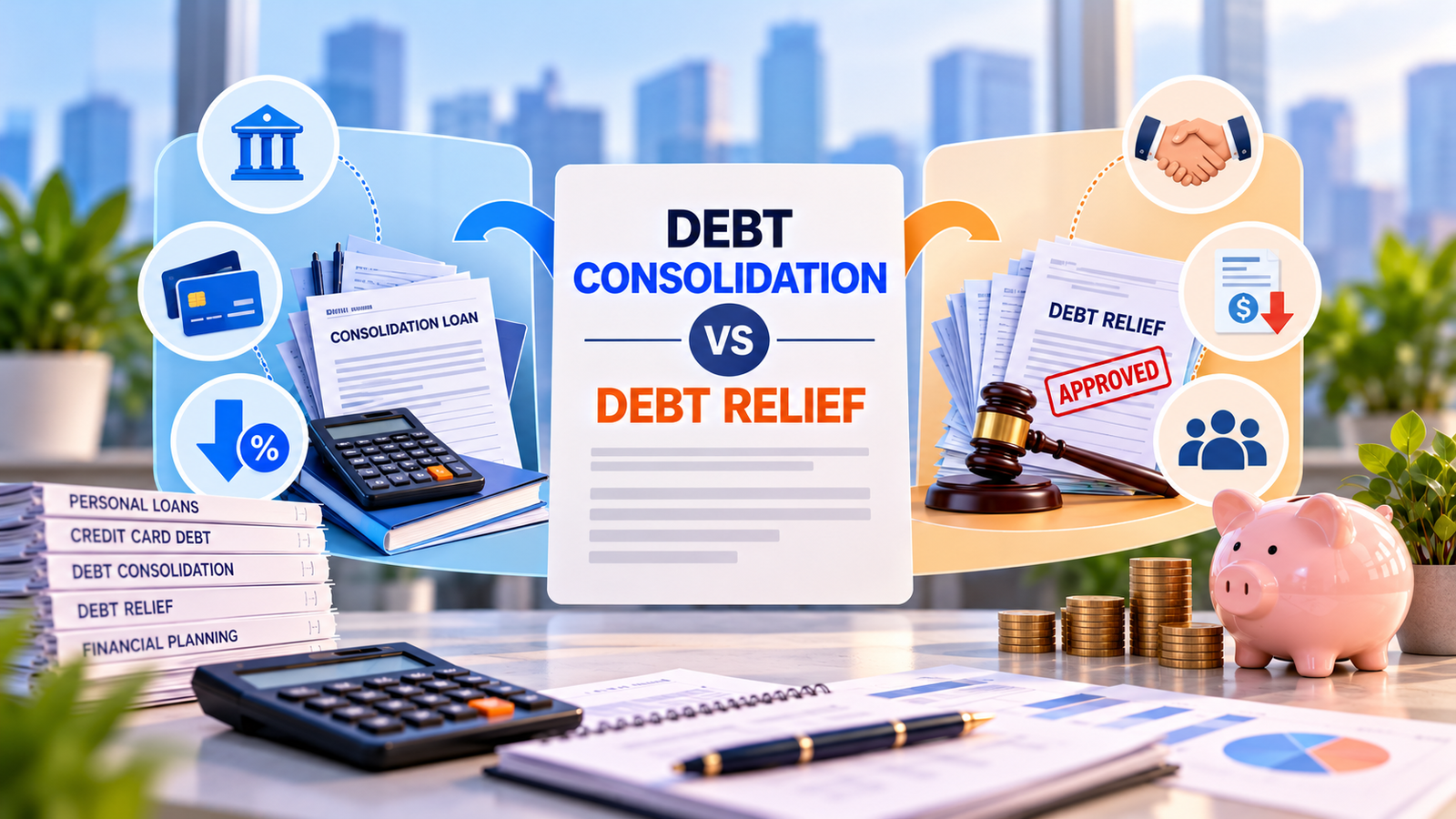
Juggling several balances is stressful. Interest keeps piling up, and minimum payments barely help. Many people reach a point where they must pick a clear strategy.
Two options come up most often. This guide covers debt consolidation vs. debt relief, including how each works, what each costs, and who benefits. By the end, you will know which path suits you.
At DebtCares, we help people understand their debt relief options. Our guides turn complex money topics into clear, practical steps. We want you to make confident decisions about your finances.
Why Debt Consolidation vs Debt Relief Matters
People often use these terms as if they mean the same thing. They do not. The two approaches work differently, cost different amounts, and affect your credit in different ways.
Choosing the wrong one can waste time and money. Therefore, understanding debt consolidation vs. debt relief is the first step toward a good decision.
Many households face this choice. The average American debt numbers show how common heavy balances have become.
What Is Debt Consolidation?
Debt consolidation combines several debts into one new loan or account. You use the new loan to pay off your old balances. Then you make a single monthly payment.
You still repay everything you owe. The goal is a lower interest rate, a simpler schedule, or both.
Common consolidation tools include:
- Personal consolidation loans
- Balance transfer credit cards
- Home equity loans or lines of credit
- Debt management plans through nonprofit counsellors
Consolidation works best when you can afford your payments but struggle with high interest. If you have good credit, low-interest debt consolidation can reduce your total cost.
What Is Debt Relief?
Debt relief is a broader term. It covers any strategy that reduces what you owe or the pressure you face. Some forms cut your balance. Others change your terms.
Typical debt relief options include:
- Debt settlement, which negotiates a smaller payoff
- Credit counselling and debt management plans
- Bankruptcy
- Hardship programs from lenders
Debt relief usually suits people who cannot repay their full balances. To see the mechanics, read how debt relief programs work.
Debt Consolidation vs Debt Relief: Key Differences
The comparison below shows where the two options split.
- Goal: Debt Consolidation — Simplify payments and lower interest; Debt Relief — Reduce or restructure what you owe
- Amount repaid: Debt Consolidation — Full balance; Debt Relief — Often less than the full balance
- Credit needed: Debt Consolidation — Fair to good credit; Debt Relief — Any credit level
- Credit impact: Debt Consolidation — Mild and often temporary; Debt Relief — Often more severe
- Best for: Debt Consolidation — Manageable debt; Debt Relief — Overwhelming debt
In short, consolidation changes how you repay. Debt relief often changes how much you repay.
How Debt Consolidation Works
The process is simple. First, you apply for a loan or card. Next, the lender reviews your credit and income. After approval, you use the funds to pay off your other debts.
From then on, you repay one lender. A fixed rate and fixed term make budgeting easier.
However, consolidation does not erase debt. If you run up your old cards again, your situation gets worse.
How Debt Relief Works
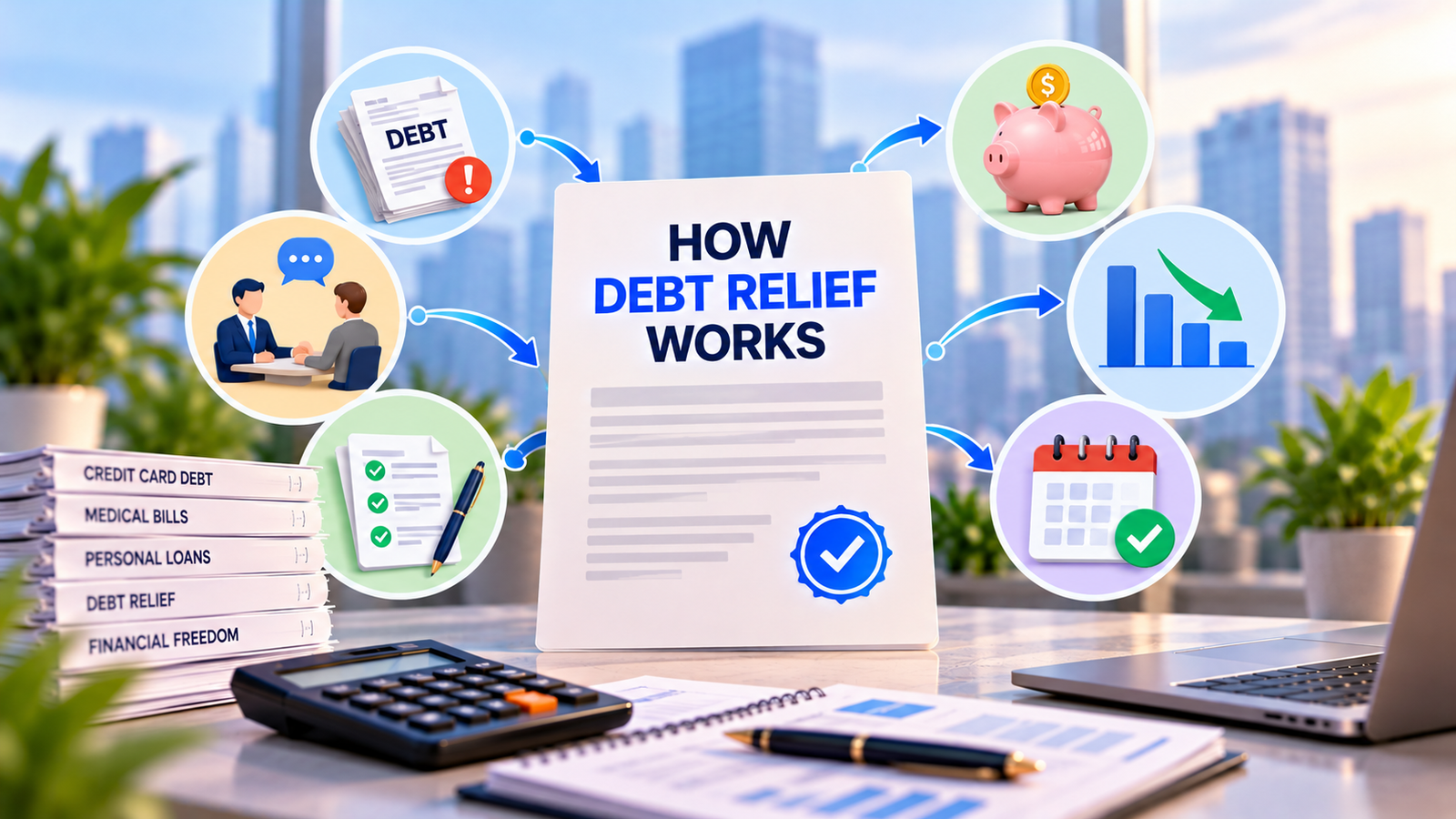
Debt relief varies by method. With settlement, a company negotiates with your creditors on your behalf. You typically save money in a dedicated account while the company works toward a deal.
With credit counselling, a nonprofit agency negotiates lower interest rates. You then make one monthly payment to the agency.
Importantly, FTC rules bar companies that sell debt relief by phone from charging fees before they settle at least one of your debts. Walk away from any company that asks for payment upfront.
Pros and Cons of Debt Consolidation
Pros
- One simple monthly payment
- A potentially lower interest rate
- A fixed payoff date
- Less credit damage than most relief options
Cons
- You need decent credit to get a good rate
- Origination fees may apply
- Longer terms can increase total interest
- It does nothing about overspending habits
Pros and Cons of Debt Relief
Pros
- You may pay less than you owe
- It helps when you cannot afford full payments
- Some options stop collection pressure
Cons
- Your credit score will likely drop
- Forgiven debt may be taxable
- Fees can be high
- Scammers target people seeking help
Moreover, credit damage is a top concern for most borrowers. Read whether debt relief hurts your credit to understand how long the effects last.
How to Choose Between Debt Consolidation vs Debt Relief
Your finances decide the answer. Ask yourself these questions:
- Can I afford my current payments? If yes, consolidation may fit. If no, relief may be better.
- What is my credit score? A strong score unlocks better consolidation rates.
- How much do I owe compared with my income? Debt above half your income often points toward relief.
- Can I stop using credit? Consolidation only works if you avoid new debt.
- How soon do I need relief? Consolidation usually moves faster than settlement.
Therefore, an honest look at your budget is the best starting point. When you weigh debt consolidation vs debt relief, let your numbers guide you rather than marketing claims.
Who Should Choose Debt Consolidation?
Consolidation tends to work for borrowers who:
- Have steady income
- Hold a fair to good credit score
- Owe mostly high-interest unsecured debt
- Want to protect their credit
- Feel confident they can stay on budget
If that sounds like you, comparing lenders is your next step.
Who Should Choose Debt Relief?
Debt relief tends to work for borrowers who:
- Have fallen behind on payments
- Face hardship such as job loss or illness
- Owe more than they can realistically repay
- Have already tried budgeting without success
Specific groups may also qualify for tailored help. For example, senior debt relief programs support older adults on fixed incomes. Similarly, debt relief for veterans offers benefits built for those who served.
Other Options to Consider
Neither path fits everyone. Consider these alternatives as well:
- Grants and assistance: Some people qualify for grants to pay off debt, which they never repay.
- Direct negotiation: Call your lender and ask for a hardship plan.
- The snowball or avalanche method: Pay off balances by size or by interest rate.
- Bankruptcy: This is a last resort for severe cases, so speak with a licensed attorney first.
Business owners face a different challenge. If company debt is the problem, look into business debt settlement rather than personal options.
Common Mistakes to Avoid
Whichever option you choose, avoid these errors:
- Ignoring the total cost and focusing only on the monthly payment
- Skipping the fine print on fees and terms
- Falling for guaranteed results or upfront-fee offers
- Running up cleared credit cards again
- Waiting too long to act
Final Thoughts
The choice of debt consolidation vs debt relief comes down to your budget, your credit, and your goals. Consolidation simplifies repayment, while relief reduces what you owe. Neither one fits every borrower.
Start by listing your debts and reviewing your income. Then compare your options carefully. With a clear plan, you can move toward a debt-free future with confidence.
Frequently Asked Questions
What is the main difference between debt consolidation and debt relief?
Consolidation combines your debts into one payment, and you repay the full amount. Debt relief aims to reduce what you owe or restructure your terms. Consolidation suits manageable debt, while relief suits overwhelming debt.
Which hurts your credit more?
Debt relief usually hurts more. Settlement and bankruptcy leave negative marks on your report. Consolidation may cause a small, temporary dip from a hard inquiry, but on-time payments can raise your score over time.
Can I use both debt consolidation and debt relief?
Sometimes, yes. For example, you might settle one large account and consolidate the rest. However, each situation differs, so a nonprofit credit counsellor can help you plan.
Is debt relief a scam?
Legitimate debt relief exists, but scams do too. Avoid companies that demand upfront fees, guarantee results, or tell you to ignore creditors without explanation. Research any company before you share personal details.
How do I know if I qualify for debt consolidation?
Lenders review your credit score, income, and existing debt. Many prefer a score of 670 or higher for the best rates. Prequalification tools let you check your options without hurting your score.