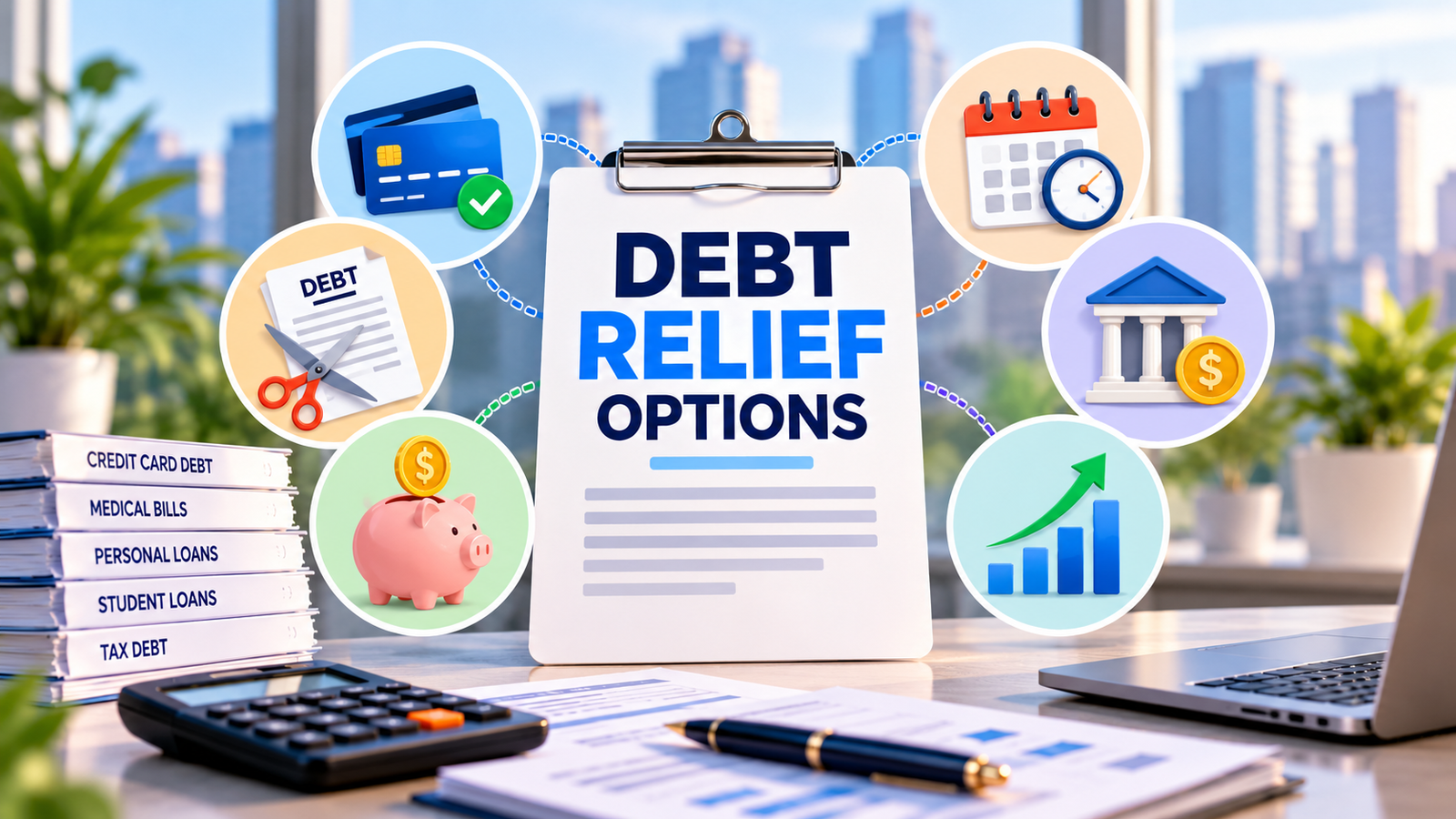
Debt can feel like a weight that never lifts. Minimum payments barely dent the balance, and interest keeps stacking up. Fortunately, you have more than one way out.
This guide breaks down the most common debt relief options, explains how each works, and shows you how to pick the best one. Whether you owe a little or a lot, a clear plan makes the problem smaller.
You are not alone in this. Check how much debt the average American has, and you will see that millions of households face the same challenge.
What Are Debt Relief Options?
Debt relief options are strategies that help you lower, restructure, or eliminate what you owe. Some reduce your interest rate. Others reduce the balance itself. A few simply give you a better repayment plan.
Most options fall into these categories:
- Do-it-yourself repayment strategies
- Debt consolidation
- Debt management plans
- Debt settlement
- Bankruptcy
Each path suits a different situation. Therefore, the right choice depends on your income, your credit, and how far behind you are.
Option 1: Do-It-Yourself Repayment
If you can still make payments, start here. Many people solve their debt problem without outside help. You keep full control, and you pay no fees.
Two popular methods work well:
- Snowball method. Pay off your smallest balance first, then roll that payment into the next debt.
- Avalanche method. Pay off the highest-interest debt first to save the most money.
Moreover, you can call your creditors directly. Ask for a lower rate, a hardship plan, or a waived fee. Many issuers agree, especially if you have a solid payment history. For step-by-step tactics, read our guide on how to lower credit card debt.
Option 2: Debt Consolidation
Debt consolidation combines several balances into one new loan or card. You then make a single monthly payment. Ideally, the new rate is lower than your old average.
Common methods include:
- Personal consolidation loans
- Balance transfer credit cards
- Home equity loans or lines of credit
This option works best when you have good credit and steady income. If you qualify, low-interest debt consolidation can cut your costs and shorten your payoff timeline.
However, consolidation carries risks. Fees, longer terms, and new spending habits can erase the benefits. Therefore, review the debt consolidation pros and cons before you apply.
Option 3: Debt Management Plans
A debt management plan, or DMP, comes from a nonprofit credit counselling agency. The counsellor reviews your budget and negotiates with your creditors. They often secure lower interest rates and waived fees.
Here is how a DMP typically works:
- You meet with a certified credit counsellor.
- The agency contacts your creditors.
- You make one monthly payment to the agency.
- The agency distributes the money to your creditors.
- You finish repayment in about three to five years.
In addition, a DMP usually requires you to close your credit cards. That step prevents new debt. It also may lower your score temporarily, but consistent payments rebuild it.
Option 4: Debt Settlement
Debt settlement aims to reduce the total amount you owe. A settlement company negotiates with creditors to accept less than the full balance. You usually pay the agreed amount in a lump sum or a short series of payments.
This option fits borrowers who are already behind and cannot afford full repayment. However, it carries real trade-offs:
- Your credit score may drop significantly.
- Creditors do not have to agree.
- Fees can reach a percentage of the enrolled or settled debt.
- Forgiven debt may count as taxable income.
Before you pursue this route, learn how to get credit card debt forgiven and what the tax consequences look like. Furthermore, ask any company to explain its process in writing.
Option 5: Debt Relief Programs
Many people use the phrase “debt relief” for a structured program that combines negotiation, budgeting, and a clear payoff plan. These programs vary by provider, so understanding the process matters.
To see what happens at each stage, read about how debt relief programs work. Typically, a program reviews your finances, contacts your creditors, and sets a payment schedule.
Many borrowers also fear the credit impact. That concern is valid, so check whether debt relief hurts your credit before you enrol. In most cases, the short-term dip is smaller than the damage from missed payments.
Option 6: Bankruptcy
Bankruptcy is the most serious of all debt relief options. It can eliminate or restructure debt under court supervision. Because of its impact, most people treat it as a last resort.
Consumers usually file under one of two chapters:
- Chapter 7. A court may discharge many unsecured debts, but you could lose some assets.
- Chapter 13. You follow a three- to five-year repayment plan and keep your property.
Bankruptcy stays on your credit report for seven to ten years. Nevertheless, it gives some borrowers a genuine fresh start. Speak with a licensed bankruptcy attorney before you decide.
Debt Relief Options Compared
This quick comparison shows how the main choices differ.
- DIY repayment — Best for steady income and manageable debt; main risk: requires discipline.
- Consolidation — Best for good credit and high-interest debt; main risk: fees and longer terms.
- Debt management plan — Best for fair credit and credit card debt; main risk: closed accounts.
- Debt settlement — Best for hardship and borrowers behind on payments; main risks: credit damage and taxes.
- Bankruptcy — Best for overwhelming, unmanageable debt; main risk: long-term credit impact.
Still unsure between the two most popular paths? Compare debt consolidation vs. debt relief to see which fits your finances.
How to Choose Among Your Debt Relief Options
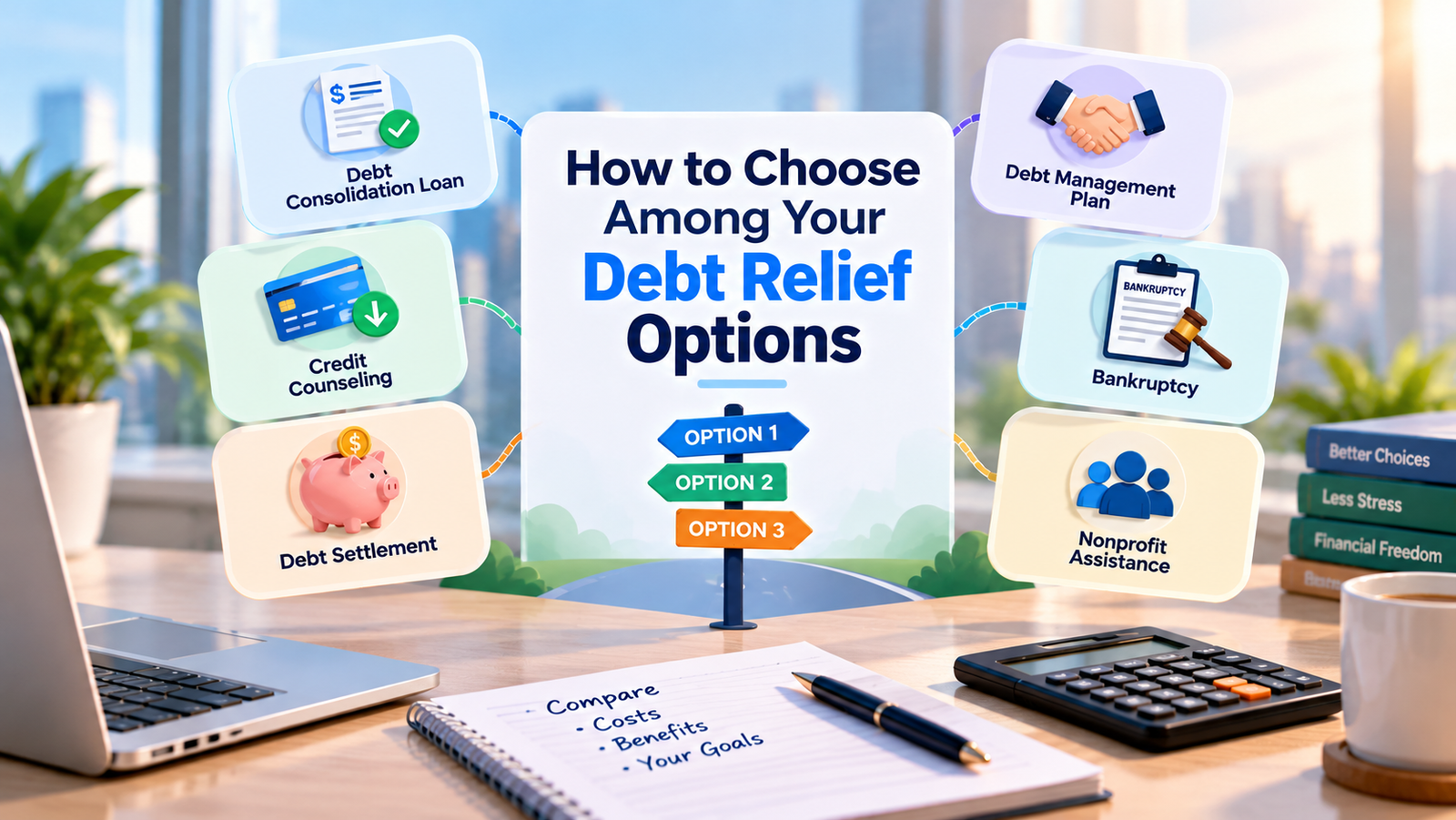
Ask yourself these questions before you commit:
- Can I afford my current payments? If yes, DIY methods or consolidation may work.
- Is my credit still strong? Good credit opens better consolidation rates.
- Am I already behind? Settlement or a DMP may help more.
- How much do I owe compared with my income? Large gaps may point toward bankruptcy.
- What fees will I pay? Always calculate the total cost.
In addition, gather your statements and list every balance, rate, and minimum payment. A clear picture makes comparison much easier. Free nonprofit counsellors can also review your numbers without pressure.
Free Help and Grants
Some assistance costs nothing. Local charities, community action agencies, and nonprofit programs may cover rent, utilities, or food. That support frees up cash for debt payments.
Direct grants for personal debt are rare, though. To explore what may exist, browse these grants to pay off debt and verify every program’s legitimacy.
How to Spot Debt Relief Scams
Unfortunately, scammers target people in financial stress. Therefore, protect yourself. Walk away if a company:
- Charges large fees before doing any work
- Guarantees it will erase your debt
- Pressures you to act immediately
- Tells you to stop communicating with creditors
- Refuses to put terms in writing
Reputable providers explain risks clearly. They also follow Federal Trade Commission rules on advance fees for debt settlement services.
Final Thoughts
The best debt relief options match your income, credit, and goals. Start with the simplest solution, and move to stronger ones only if needed. Above all, act early. Interest and fees grow every month you wait.
Gather your numbers, compare your choices, and speak with a trusted professional. With the right plan, a debt-free future is within reach.
Frequently Asked Questions
1. What are the main debt relief options?
The main debt relief options include DIY repayment, debt consolidation, debt management plans, debt settlement, and bankruptcy. Each one suits a different level of debt and credit health.
2. Which debt relief option is best for credit card debt?
It depends on your situation. Borrowers with good credit often benefit from consolidation. Those who are struggling may prefer a debt management plan or settlement.
3. Do debt relief options hurt my credit score?
Some do, and some do not. Debt settlement and bankruptcy usually cause larger drops. Consolidation and debt management plans typically have a smaller and shorter impact.
4. How long do debt relief programs take?
Most programs take two to five years. Timelines depend on your balance, your payment amount, and the option you choose.
5. Can I try debt relief options on my own?
Yes. You can negotiate with creditors, build a budget, and use snowball or avalanche methods without a company. Professional help becomes useful when the debt feels too large to manage alone.