
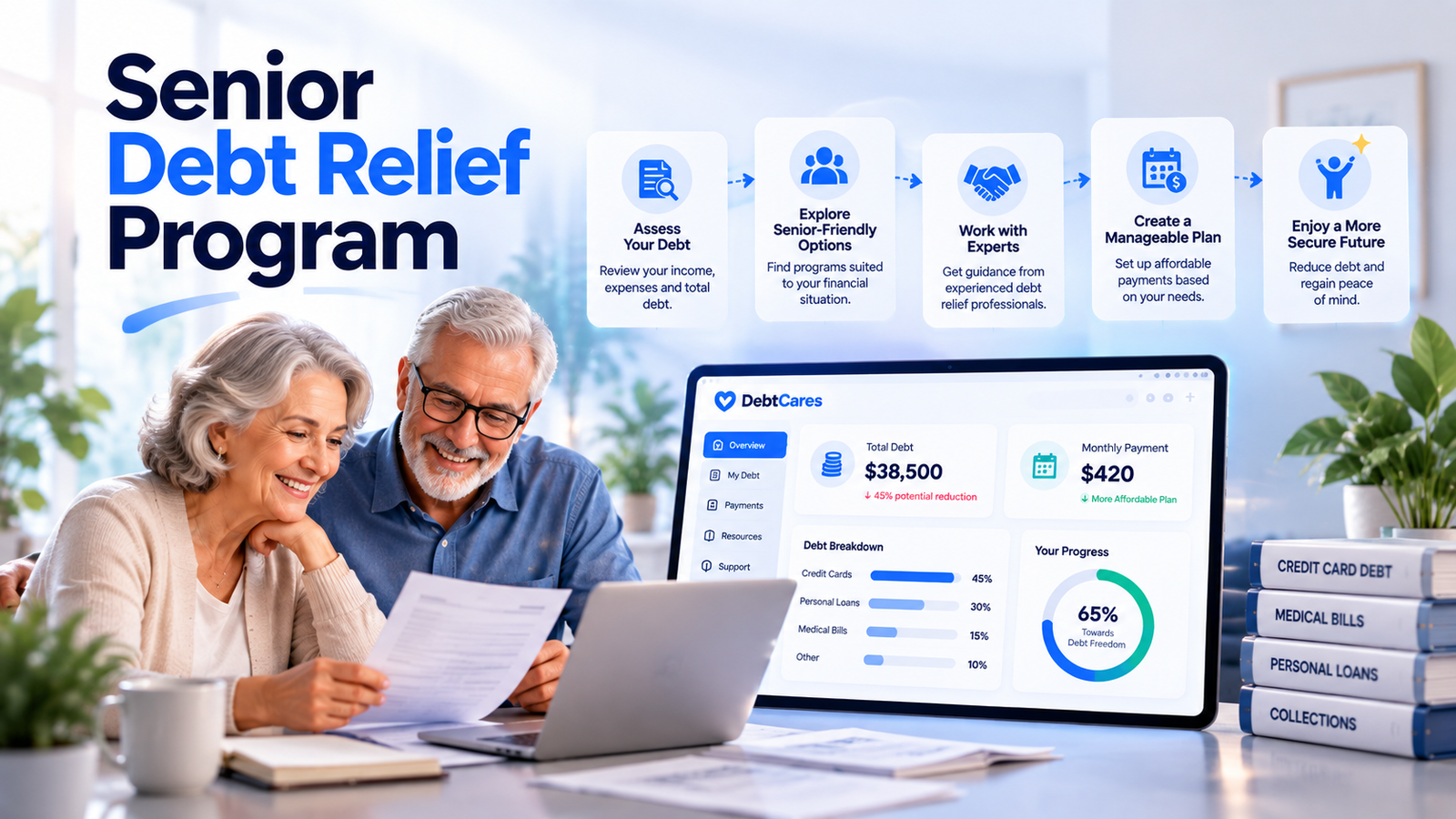
Managing debt becomes increasingly challenging on a fixed income, which is why many older adults turn to a senior debt relief program for help. Whether the debt comes from medical bills, credit cards, or unexpected expenses during retirement, a senior debt relief program can offer a structured path toward financial stability. This guide covers everything you need to know before enrolling.
What Is a Senior Debt Relief Program?
A senior debt relief program is a specialized financial service designed to help older adults, particularly those living on fixed incomes like Social Security or retirement savings, reduce or restructure unmanageable debt. Unlike general debt relief services, a senior debt relief program often takes into account the unique financial realities seniors face, such as limited income growth potential and reliance on retirement funds. According to the Consumer Financial Protection Bureau's guidance on what a debt relief program is and how to know if you should use one, these programs typically fall into categories like debt settlement, consolidation, or credit counselling.
Why Seniors Need Specialized Debt Relief Options
Older adults face distinct financial challenges that make a senior debt relief program particularly valuable:
- Fixed incomes: Social Security and pension income rarely increase enough to outpace rising debt
- Medical expenses: Healthcare costs often rise significantly with age, contributing to debt accumulation
- Limited earning potential: Unlike younger adults, seniors may not have the option to simply "earn more" to pay down debt
- Retirement savings depletion: Some seniors dip into retirement accounts to cover debt, risking long-term financial security
- Credit card reliance: Many seniors use credit cards to bridge income gaps, leading to high-interest debt accumulation
A senior debt relief program addresses these specific circumstances rather than applying a one-size-fits-all approach.
How Does a Senior Debt Relief Program Work?
The mechanics of a senior debt relief program generally follow a structured process:
- Financial Assessment: A counsellor or company reviews your income, debts, and overall financial situation
- Program Selection: Based on your circumstances, you're matched with settlement, consolidation, or a management plan
- Enrollment: You agree to program terms, which may include monthly deposits or restructured payments
- Negotiation: The company negotiates with creditors to reduce balances or interest rates
- Resolution: Debts are paid off or settled according to the negotiated terms
Freedom Debt Relief offers detailed insight into how their debt relief services are tailored specifically for seniors, highlighting considerations unique to older adults navigating debt on limited incomes.
Types of Senior Debt Relief Programs
Several approaches fall under the umbrella of a senior debt relief program, each with different benefits and trade-offs:
Debt Settlement
This involves negotiating with creditors to accept less than the full amount owed. While effective at reducing total debt, it can significantly impact credit scores and may result in taxable forgiven debt.
Debt Consolidation
Combining multiple debts into a single loan or payment, often with a lower interest rate, making monthly obligations more manageable without necessarily reducing the total amount owed.
Credit Counselling and Debt Management Plans
Nonprofit credit counselling agencies can help seniors create structured repayment plans, often negotiating reduced interest rates directly with creditors while keeping accounts in good standing.
Bankruptcy
For seniors with overwhelming, unmanageable debt, bankruptcy may be a legal option, though it carries long-term credit consequences and should be considered carefully.
Is a Senior Debt Relief Program Right for You?
Not every older adult struggling with debt needs a formal senior debt relief program. Consider these factors when deciding:
- Amount of debt relative to income: If debt payments consume a large portion of fixed income, formal relief may help
- Type of debt: Unsecured debts like credit cards are typically eligible, while secured debts like mortgages usually aren't
- Ability to make program payments: Most programs require consistent monthly deposits or payments
- Credit score priorities: If preserving credit is essential, gentler options like consolidation may be preferable to settlement
- Long-term financial goals: Consider how debt relief fits into broader retirement and estate planning
For a deeper understanding of specialized settlement services designed for older adults, this overview of loan settlement services tailored to seniors facing debt provides useful context on how these programs are structured.
Benefits of a Senior Debt Relief Program

Choosing a senior debt relief program can offer meaningful advantages for older adults:
- Reduced monthly payment obligations, easing pressure on fixed income
- Potential reduction in total debt owed, particularly through settlement
- Protection of retirement savings, by addressing debt without draining 401(k) or IRA funds
- Structured path to becoming debt-free, rather than indefinite minimum payments
- Professional negotiation support, reducing stress of dealing with creditors directly
- Customized approach, accounting for fixed income and limited earning potential
Potential Risks and Drawbacks
While a senior debt relief program can provide relief, it's important to understand the potential downsides:
- Credit score damage, especially with settlement-based programs
- Possible tax implications on forgiven debt, which may be considered taxable income
- Continued creditor contact during the negotiation period in settlement programs
- Program fees, which can reduce overall savings
- Not all creditors agree to negotiate, meaning some debts may remain unresolved
Understanding these trade-offs helps ensure a senior debt relief program is approached with realistic expectations.
How to Choose a Legitimate Senior Debt Relief Program
With so many companies offering debt relief services, it's essential to vet options carefully. Follow these steps:
- Verify accreditation through recognized industry organizations
- Check reviews and complaints with the Better Business Bureau or Consumer Financial Protection Bureau
- Request a clear breakdown of fees before enrolling in any program
- Avoid companies demanding upfront fees before any debt resolution occurs
- Consult a nonprofit credit counsellor for an unbiased assessment of your options
- Ask about specific senior-focused expertise, since fixed-income considerations require specialized knowledge
The Consumer Financial Protection Bureau's resource on determining whether a debt relief program is the right choice for your situation offers additional guidance on evaluating legitimacy and fit.
Alternatives to a Senior Debt Relief Program
Before committing to a formal senior debt relief program, consider whether these alternatives might address your situation:
- Budget restructuring: Working with a financial advisor to reduce expenses and free up funds for debt payoff
- Direct creditor negotiation: Some creditors offer hardship programs directly, without third-party involvement
- Family assistance: In some cases, family members may be able to help manage or pay down debt
- Government assistance programs: Certain programs exist to help seniors with specific expenses like medical bills or utilities, indirectly easing debt pressure
- Nonprofit credit counselling: Often a lower-cost alternative to for-profit debt settlement companies
Steps to Get Started with a Senior Debt Relief Program
If you've decided a senior debt relief program is the right path, here's how to begin:
- Gather all debt information, including balances, interest rates, and creditor details
- Calculate your fixed income and monthly expenses to understand your true financial picture
- Research multiple debt relief companies specializing in senior-focused services
- Request consultations to compare program structures and fees
- Ask detailed questions about credit impact, timelines, and tax implications
- Choose a program that aligns with your financial goals and risk tolerance
- Stay engaged throughout the process, monitoring progress and communicating with your assigned counsellor
Final Thoughts
A senior debt relief program can provide meaningful support for older adults on a fixed income navigating debt, offering structured paths to reduced balances and manageable payments. However, carefully evaluate program types, understand potential credit and tax implications, and choose a reputable provider with experience serving seniors. By taking the time to research thoroughly and ask the right questions, older adults can find a debt relief solution that protects both their financial stability and peace of mind during retirement.
Frequently Asked Questions
1. What is a senior debt relief program?
A senior debt relief program is a specialized financial service designed to help older adults reduce or restructure debt, often accounting for fixed incomes and limited earning potential unique to retirement.
2. Will a senior debt relief program affect my credit score?
Yes, particularly settlement-based programs, since they often involve missed payments before negotiation. Consolidation and credit counselling options typically have a milder impact.
3. Can Social Security income be used to qualify for a senior debt relief program?
Yes, many programs consider Social Security and other fixed income sources when assessing eligibility and determining appropriate payment structures.
4. Are there special protections for seniors in debt relief programs?
While there aren't universal legal protections specific to seniors, reputable programs typically tailor their approach to account for fixed incomes and retirement-related financial concerns.
5. How long does a senior debt relief program take to complete?
Most programs take between 24 and 48 months, depending on total debt enrolled and how quickly creditors agree to negotiated terms.
6. Is bankruptcy better than a senior debt relief program for older adults?
It depends on individual circumstances. Bankruptcy offers legal debt discharge but carries long-term credit consequences, while other relief programs may offer a less severe alternative depending on debt type and amount.